Key Takeaways
- The Dyson HF1 replaces two appliances but the smart features, not the heating or cooling, justify its $499 price
- Its "cooling" mode is marketing speak for a powerful fan — it does not lower room temperature
- Bladeless design solves the genuine annoyance of cleaning grilles and the real hazard of exposed blades
- At 26 decibels in Sleep mode, it's quiet enough for a bedroom, but the metal casing gets hot in heating mode
Three months ago I boxed up my space heater and disconnected my ceiling fan. A single Dyson Hot+Cool HF1 now sits where both used to live. The swap sounds like a lifestyle upgrade. It is mostly a software upgrade.
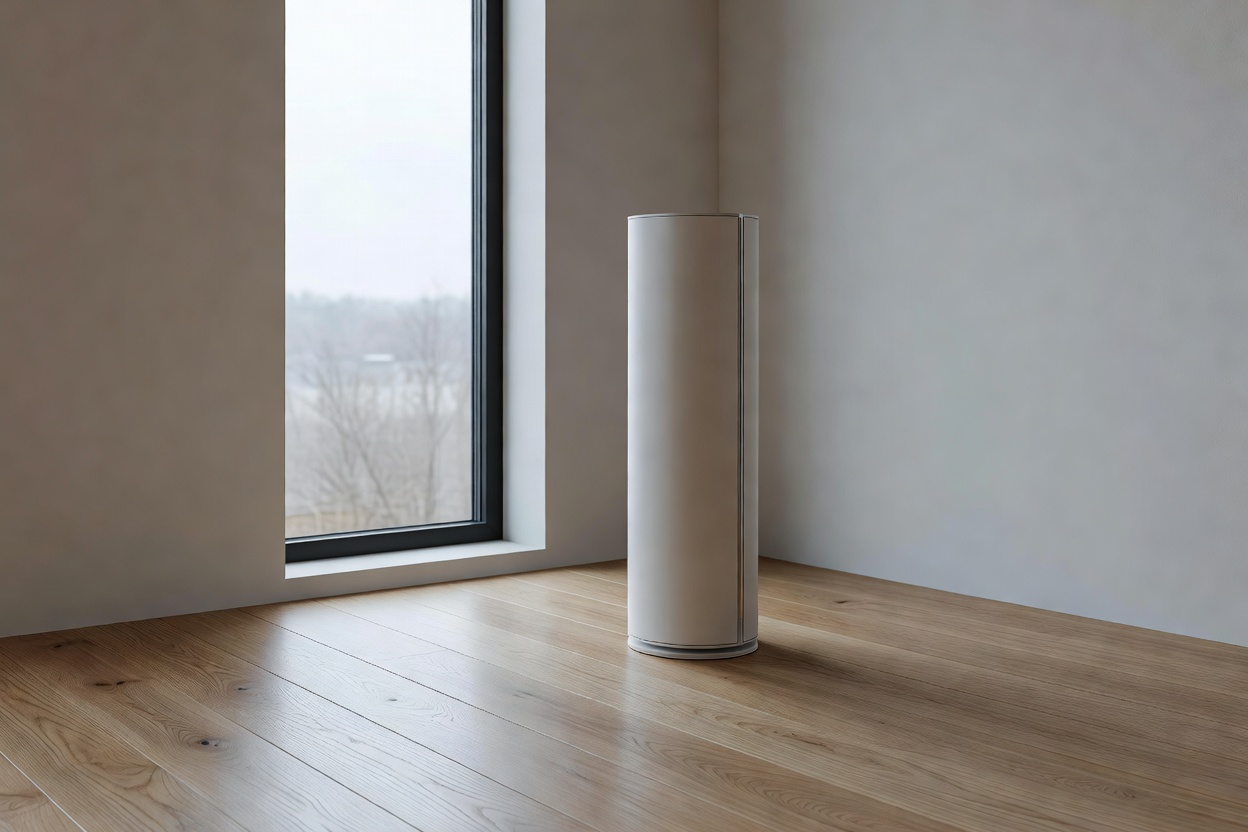
The hardware is competent. Dyson's bladeless amplifier moves air without the buffeting chop of conventional blades. In heating mode the thermostat monitors the room and modulates output to hold a target temperature — no more cycling between roasting and freezing. The unit weighs under six pounds, stands 23 inches tall, and tilts to direct airflow. Oscillation spans 15, 40, or 70 degrees. Tip it over and it kills power instantly. The metal shroud warms noticeably in heat mode, a minor burn hazard for toddlers and pets. Nothing here revolutionizes thermodynamics.
The revolution lives in the MyDyson app. I turn the unit on from bed. I schedule pre-wake heat so the bedroom hits 68 degrees before my alarm. I kill the fan from another floor when I realize I left it running. Timers, oscillation angles, mode switches — all executable without hunting the credit-card remote that always disappears into couch cushions. Sleep mode drops operation to 26 decibels and dims the display. As a light sleeper I verified the claim with a meter: 26 dB at three feet. The fan becomes white noise, not intrusion.
Cooling demands honesty. The HF1 circulates air. It does not condition it. On a 90-degree afternoon the unit creates breeze, not relief. Dyson's literature dances around this distinction. Buyers in Houston or Phoenix expecting air-conditioning performance will feel hoodwinked. In temperate climates or shoulder seasons the airflow feels substantial. The 70-degree oscillation covers a 14-by-16-foot room evenly. But call it cooling and you invite disappointment.
Cleaning is where the bladeless claim pays off. No grilles to vacuum, no blades to wipe individually. A microfiber cloth across the loop takes ten seconds. Dust cannot accumulate inside because there is no inside. For anyone who has disassembled a tower fan to scrub months of lint, this matters more than spec sheets suggest.
Price remains the friction point. Four hundred ninety-nine dollars buys a decent space heater, a decent tower fan, and a smart plug with change left for dinner. The HF1 consolidates footprint and outlet count. It adds app control, scheduling, and a design language that does not scream dorm room. Whether that bundle warrants the premium depends on how much you value unilateral control from a phone screen and the absence of grille lint in your life.
I keep the HF1. The heater stays in the closet. The ceiling fan stays uninstalled. The app wakes the room before I do. That convenience, not the thermodynamics, is what I paid for.