Key Takeaways
- Zoox's latest recall reveals a pattern: the company ships vehicles that cannot handle routine emergency scenes, then patches them after regulators intervene.
- The June incident involved a robotaxi paralyzed by smoke at an active fire — not an edge case, but a predictable failure mode the industry has ignored for years.
- NHTSA's Morrison called it a "functional insufficiency" and warned the entire sector; Zoox recalled one day before his letter landed, suggesting the company knew the hammer was coming.
- Four recalls in five months for a 105-vehicle fleet should disqualify Zoox from the safety exemption it needs to launch commercially.
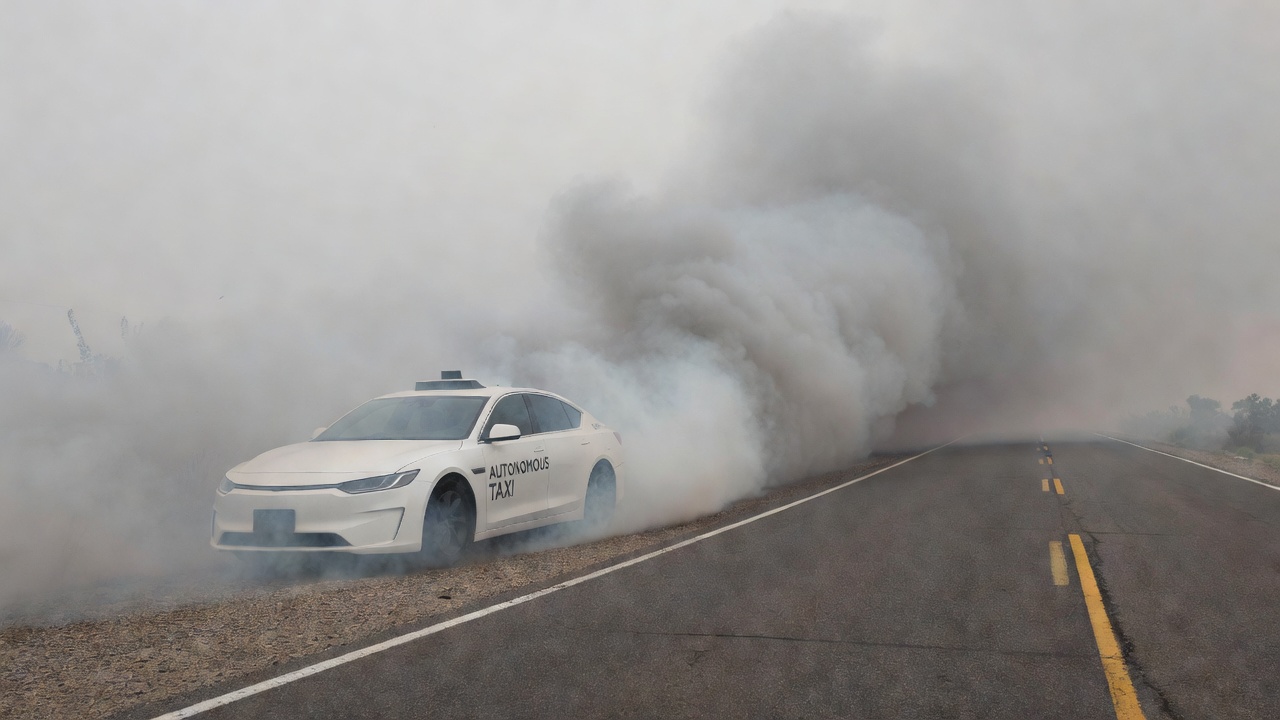
Amazon's Zoox just issued its fourth software recall in five months. The trigger: a robotaxi froze in heavy smoke at an active fire scene on June 20. No cones blocked the road. The vehicle braked hard, swerved, stopped. A remote teleoperator had to back it out so firefighters could do their jobs. Nobody was inside. Nobody was hurt. That is the company's defense — and its indictment.
The recall affects 105 vehicles. One hundred five. That is not a fleet. That is a science project. Yet Zoox is offering free rides in Las Vegas and San Francisco, angling for a commercial launch that hinges on a federal safety exemption. The National Highway Traffic Safety Administration must decide whether a company that cannot detect smoke deserves a pass on federal crash standards. The answer should be obvious.
NHTSA administrator Jonathan Morrison sent a letter to the entire self-driving industry one week ago. He did not mince words. Emergency scenes are not rare edge cases. The inability to detect and respond to them is a functional insufficiency. He demanded immediate action. Zoox issued its recall on July 7. Morrison's letter is dated July 8. The timing is not coincidental. Zoox knew the regulator had drawn a line. The company stepped across it anyway, then raced to patch the software before the letter went public.
This is the same pattern that has plagued Waymo. TechCrunch documented at least six incidents where first responders physically moved robotaxis from emergency scenes. Six. In multiple cities. The industry treats emergency vehicles as anomalies. They are not. They are daily reality. Sirens, flashing lights, smoke, cones, hoses across lanes, officers directing traffic — these are the operating environment. A system that chokes on smoke is not ready for public roads. It is ready for a test track.
Zoox's March recall addressed hard braking that NHTSA had investigated since 2024. Two May recalls followed a collision with a passenger car and an incident where an e-scooter rider struck a Zoox vehicle. Four recalls. Five months. One hundred five vehicles. The math is brutal: one recall for every 26 vehicles. For every 37 days of operation. A mature automotive supplier would face existential scrutiny at that rate. Zoox gets a press release and a software update.
The company says the June smoke incident is the only one of its kind. That claim deserves skepticism. Zoox only knows what its sensors and teleoperators report. A vehicle that stops in smoke and waits for remote help generates a clean log entry: "stopped safely, teleoperator intervened." It does not generate a near-miss report unless someone bothers to review the footage. NHTSA asked about severity, frequency, and root causes in late June and early July. Those conversations happened because the regulator saw something Zoox tried to minimize.
The software update "enhances the existing capability of detecting active emergency scenes by adding the ability to detect and respond to heavy smoke in certain situations." Read that again. Certain situations. The hedging is baked into the fix. Heavy smoke is not a corner case. It is a standard byproduct of fire. If the system cannot handle it universally, the fix is a bandage.
Amazon has the capital to solve this properly. It has the compute, the talent, the simulation infrastructure. It chooses not to. Zoox expands to new cities — Las Vegas, San Francisco, Austin, Miami — while the core perception stack still fails on smoke. Expansion masks stagnation. Each new city generates headlines. Each recall generates footnotes. The business model depends on the public ignoring the footnotes.
NHTSA now holds the leverage. The exemption Zoox needs for commercial launch requires a finding that the vehicle is as safe as a human-driven car. A human driver sees smoke, slows, assesses, proceeds or stops. A human driver does not brake hard, swerve, stop dead, and wait for a remote operator to reverse out of a fire scene. That is not equivalent safety. That is a hazard.
The industry wants us to believe these are growing pains. They are not. They are design choices. Companies ship perception systems trained on clear weather and marked roads. They treat degradation — smoke, rain, glare, occlusion — as someone else's problem. First responders pay the price. The public pays the risk. Zoox's recall is not a fix. It is an admission that the product was shipped incomplete. Again.
Morrison's letter should be the turning point. If NHTSA enforces its own standard, Zoox's exemption dies. So does the timeline for every other operator cutting the same corners. If the regulator folds, the message is clear: functional insufficiency is acceptable until someone dies. That is not regulation. That is roulette.