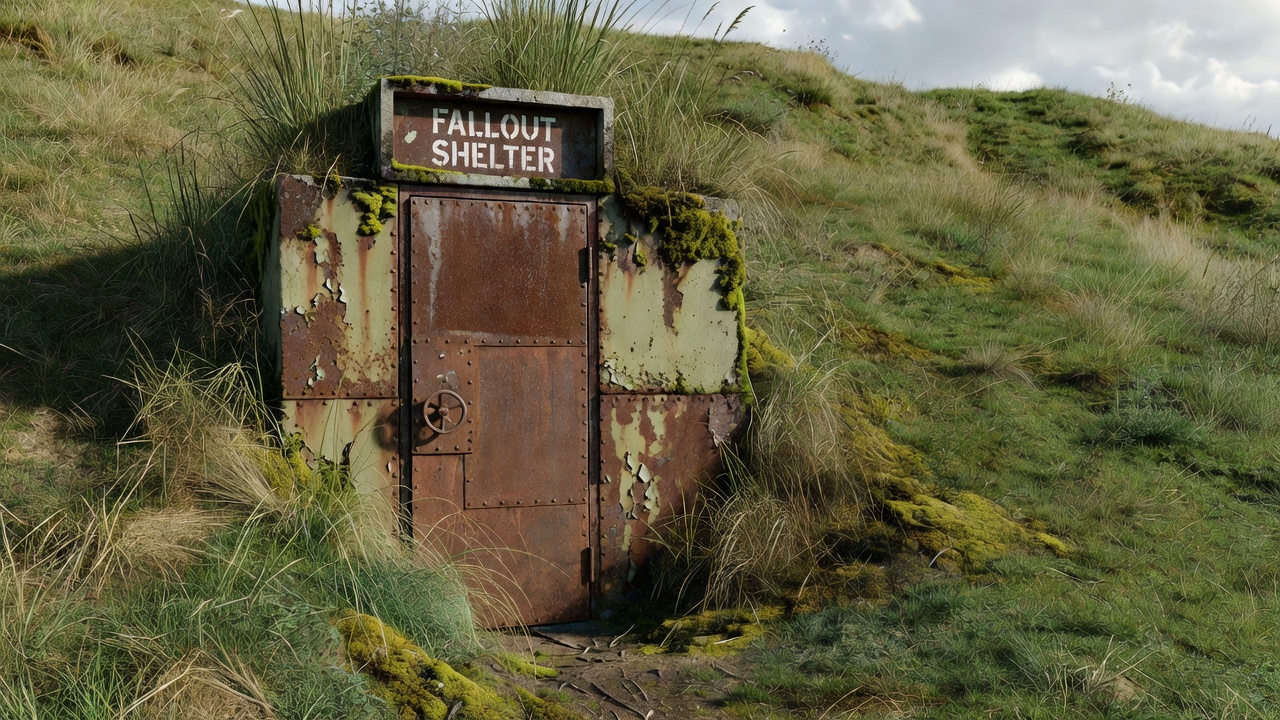
Key Takeaways
- Fallout 5 exists only as a "one-pager" and a promise to arrive after The Elder Scrolls 6, which itself remains years away
- Todd Howard has been vague for a decade while Bethesda's slate fills with other projects
- The Fallout TV show's creators know the game's direction — Howard made sure they didn't step on it
- Xbox layoffs just preceded the roadmap reveal; pre-production status means a 2030s launch at best
Bethesda has finally admitted what everyone assumed: Fallout 5 is happening. The confirmation arrived buried in a studio roadmap published days after Microsoft cut 1,900 jobs across Xbox. Timing matters. The roadmap calls the project "pre-production." In Bethesda terms that means a small team is sketching systems, not building worlds. Todd Howard told IGN in 2021 they had a one-pager. Three years later the description hasn't expanded.
Howard's candor has always carried an expiration date. He said in 2022 that Fallout 5 follows The Elder Scrolls 6. That sequel remains in pre-production as of mid-2026. Starfield launched in 2023 after six years of full development. Elder Scrolls 6 will likely need more. Fallout 5 slides behind it. Do the math. A 2032 release would be optimistic. A 2035 release would match Bethesda's actual cadence.
The one-pager line deserves scrutiny. A one-pager is not a design document. It is a thesis statement. Howard described it as "what we want to do." Not what they are doing. Not what works. Want. That gap between ambition and execution defines modern Bethesda. Fallout 4 shipped with a voiced protagonist and a dialogue wheel that fooled no one. Starfield shipped with a thousand empty planets and a recipe for boredom. The studio's systems — dialogue, quest structure, engine — have not evolved since Oblivion. They have only layered.
The Fallout TV series changes the calculus. Jonathan Nolan told Den of Geek the show's crew knows "all about Fallout 5." Howard admitted he steered them away from unwanted crossovers. That phrasing reveals priority. The show is canon. The game must not contradict it. A television writers' room now holds narrative veto power over a franchise built on player agency. That inversion should worry anyone who fell in love with the series because it let them ignore the main quest.
Platform questions persist. Microsoft owns Bethesda. Starfield stayed Xbox and PC. The Fallout show streams on Amazon. Howard has never confirmed PlayStation for Fallout 5. He has never denied it either. Silence serves the acquirer. If Microsoft decides exclusivity drives Game Pass subscriptions, Fallout 5 becomes a lever. If they decide the IP prints money everywhere, it goes multiplatform. The player has no voice in that decision.
Price? Howard laughed at the question in 2021. He would if he could wave a hand and release it tomorrow. He cannot. The industry has shifted to $70 baseline editions with $100 deluxe tiers and battle passes in single-player RPGs. Bethesda added Creation Club to Fallout 4 years after launch. They will monetize Fallout 5 earlier and harder. The roadmap's existence suggests shareholder pressure. Layoffs suggest cost discipline. The game will be built to extract recurring revenue.
Setting remains the only genuine mystery. Fallout 4 anchored in Boston. Fallout 76 wandered Appalachia. The show spans Los Angeles and the Vault-Tec headquarters. Howard loves the East Coast. He loves the Brotherhood of Steel. He loves the Enclave. He loves iconic imagery over narrative risk. Expect a recognizable American city. Expect familiar factions. Expect the same thematic loops — war never changes, humanity repeats, choose your tyrant.
The roadmap's language is deliberate. "Pre-production" shields the studio from accountability. No release window. No feature list. No screenshot. Just a bullet point that lets investors exhale. Howard has mastered this rhythm. Promise. Delay. Reframe. Repeat. He did it with Fallout 4. He did it with Starfield. He is doing it with Elder Scrolls 6. Fallout 5 is simply the next loop.
Fans mistake permanence for patience. They treat Howard's inaccessibility as craft. It is management. The man runs a studio that employs hundreds across multiple locations. He answers to a trillion-dollar parent company. His quotes are not design pillars. They are stakeholder management. Every "we have a one-pager" buys three more years of silence. Every "after Elder Scrolls 6" pushes the goalposts beyond the current console generation.
The show's involvement complicates the lore. Nolan's team writes with game writers in the room. That collaboration produces consistency. It also produces constraint. The games used to define the universe. Now the universe defines the games. Fallout 5 cannot surprise the show. The show cannot surprise Fallout 5. The result is a franchise that polishes its own mythology rather than expanding it.
Pre-production in 2026 means full production starts perhaps 2028. Five years from there. The engine — Creation Engine 2, or whatever marketing renames it — will still struggle with NPC schedules and physics objects. The dialogue system will still offer four flavors of yes. The quest markers will still glow. The innovation will arrive in presentation: better lighting, denser clutter, smoother transitions. The skeleton remains 2006.
Howard knows this. He has said he wants to accelerate. He has not said how. Hiring does not accelerate Bethesda games. More hands slow them. The studio's process is artisanal in the worst sense: hand-placed clutter, hand-scripted encounters, hand-tuned level scaling. They do not build tools that scale. They build worlds that impress in trailers and fatigue in hour twelve.
The roadmap is a press release dressed as transparency. It tells you nothing you didn't know in 2015. Fallout 5 is coming. It follows Elder Scrolls 6. It exists on paper. Howard has a vision. The show knows the vision. The vision will survive contact with development mostly intact because the studio cannot afford to change course. Not with this budget. Not with this timeline. Not with this parent company.
Wait if you want. The wasteland isn't going anywhere.