Key Takeaways
- Google open-sources Noto Emoji 3D as raw .OBJ files after a lukewarm May debut that drew 😬 reactions
- Design insights reveal 3D emoji problems nobody asked to solve — sphere, mask, or flat disc for a smiley face
- The "immersive VR worlds" pitch reads like marketing fluff for a format with no clear demand
- Users signaled they don't want emoji leaving 2D; Google handed them source files anyway
Google released its 3D emoji into the wild on Friday. The company framed it as a gift to creators — raw .OBJ files for VR worlds, indie apps, and "weird memes." The announcement landed on World Emoji Day, a calendar event that exists primarily to generate press releases. Beneath the celebratory tone sits a quieter reality: Noto Emoji 3D debuted in May and the internet responded with a grimacing face. That emoji — 😬 — captures the reception perfectly. Awkward. Forced. A little painful.
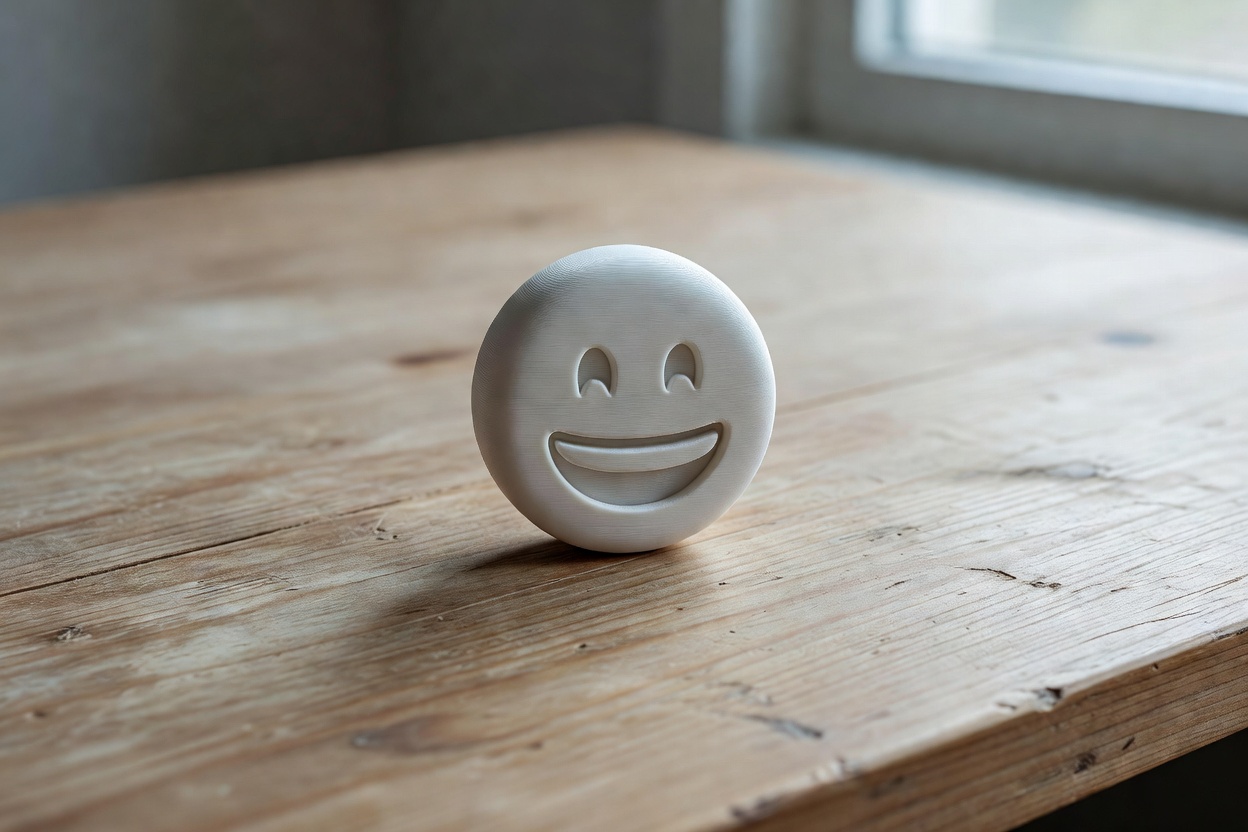
The design blog post tries to manufacture depth. It walks through the geometry of a smiley face in three dimensions. Sphere? Mask? Flat disc? These are genuine questions when you extrude a 2D glyph into 3D space. They are also questions that expose the category error at the heart of this project. Emoji are not models. They are text. They live inline with characters, scale with font size, and render in milliseconds on a decade-old phone. A 3D asset pipeline — OBJ files, materials, lighting, rigging — solves none of the problems emoji actually have. It invents new ones.
Google's designers wrestled with thickness. They debated whether a heart should have volume or remain a hollow shell. They tested "puffiness" on a ghost. This is craft, not utility. The result is a set of assets that sit in an uncanny valley: too heavy for chat, too light for games, too stylized for serious XR work. The company suggests developers might build "immersive VR worlds" with them. Name one. The Emoji Movie already proved that a universe built from reaction faces collapses under its own vacuity. Indie developers have Unity Asset Store, Sketchfab, and Kenney.nl for characters that actually animate. They do not need a static thumbs-up with baked-in normals.
Open-sourcing changes the license, not the logic. The files now sit on GitHub under Apache 2.0. Anyone can download, modify, resell. That is generous. It is also irrelevant. The barrier to 3D emoji adoption was never licensing. It was that nobody uses 3D emoji. Slack does not support them. Discord does not support them. iMessage does not support them. The only platform that rendered Noto Emoji 3D natively was Google's own — and only in limited contexts. The format never reached the keyboard. Without keyboard access, emoji are not emoji. They are clip art.
Google knows this. The company employs some of the best type engineers alive. They built Noto, a variable font family that solves real problems across scripts and weights. They understand that emoji are a text-shaping problem, not a modeling problem. So why push 3D? The answer sits in the phrase "immersive VR worlds." Google needs content for its XR ambitions. Android XR, Project Moohan, whatever the next headset platform is called — they all hunger for ready-made assets that signal "fun" and "social" in keynote sizzle reels. Emoji are recognizable, friendly, and free of licensing encumbrances. They make competent demo fodder. That is their strategic value.
The community will do what communities do. Someone will port the set to Three.js. Someone will build a React component that spins a crying face in WebGL. A meme account will animate the pile-of-poo bouncing to phonk. These artifacts will circulate for a week. Then they will vanish into the sediment layer of GitHub forks. The .OBJ files will not become a standard. They will not appear in Unicode proposals. They will not change how anyone communicates.
There is a version of this story where Google contributes the 3D emoji to the Unicode Technical Committee as a reference implementation for future color font specifications — COLRv1, SVG-in-OpenType, whatever comes next. That version does not exist. Instead we get a blog post about puffiness and a zip of OBJ files. The gap between the two versions measures the distance between Google's typographic excellence and its platform desperation.
Designers who want 3D emoji already model them. They model them to match their art direction, their pipeline, their shader budget. They do not download a preset smiley sphere from a font vendor. Developers who need emoji in 3D scenes use sprite sheets or signed distance fields — techniques that respect the text engine. The Noto 3D set serves neither group. It serves the keynote.
Google could have spent these engineering cycles on variable color fonts that render 3D-illusion emoji on any device without a GPU. It could have pushed COLRv1 adoption across Chrome, Android, and the web platform. It could have solved the real problem: emoji that look alive at 12pt and 120pt without shipping megabytes of geometry. It chose the demo asset path instead.
The open-source release is honest in one sense. It admits the project has no product home. By cutting the files loose, Google washes its hands of the experiment. "Here, you figure out what this is for." The community will not. The community will treat it as what it is: a curiosity, a footnote, a 😬 frozen in geometry.