Key Takeaways
- The Max 2 bundle drops to $369, delivering over $100 of gear for only $70 more than the camera alone.
- The extension pole and extra battery by themselves cost $75, so the deal pays for itself before the free 64 GB card is counted.
- 8K 360° video at 30 fps and 4K 180° at 60 fps give creators a professional‑grade field of view in a single pocket‑size unit.
- Waterproof to 16 ft, replaceable lenses, and a six‑mic wind‑noise array turn the Max 2 into a rugged tool for surf, snow, or street.
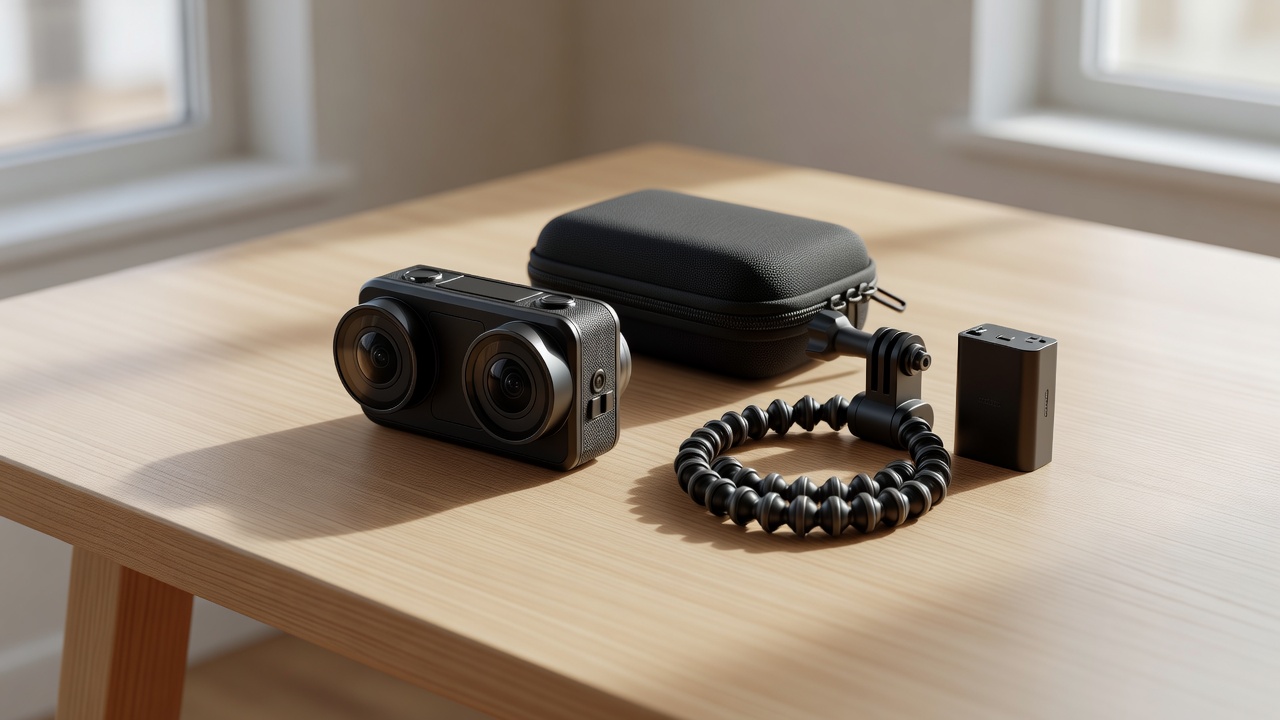
GoPro has finally priced a 360‑degree camera where the accessories make sense. The Max 2 bundle at $369 is not a gimmick; it is a calculated move to undercut the niche where Insta360 and Ricoh have held price floors. By stuffing a four‑foot extension pole, a second high‑capacity battery, a 64 GB microSD card, and a full mount kit into a package that costs only $70 over the bare camera, GoPro forces the competition to either match the bundle value or concede the entry‑level market.
The pole alone retails for $45 and the spare battery for $30. Buying them separately already exceeds the $70 premium, and the microSD card adds another $15 of value. That arithmetic means a buyer who only needs the pole and a backup battery walks away with a net gain. The remaining mounts, caps, lanyard, and cloth are gravy — useful, but not the reason the deal works.
Performance backs the price. Eight‑kilopixel 360° capture at 30 fps delivers enough detail for VR stitching, while the 180° 4K mode at 60 fps serves traditional action‑sport workflows. The six‑mic array cancels wind rumble without a post‑production pass, and Bluetooth mic support adds a pro audio path for interview‑style shoots. A 1.82‑inch LCD touchscreen lets the operator verify framing on the fly, a feature many rivals still relegate to a phone app.
Battery life is honest: 66 minutes at full 8K, 90 minutes at 5.6K. That is realistic for a single‑day adventure if the user swaps the second cell mid‑session. The replaceable lens covers protect the optics from the inevitable sand‑blast of a mountain bike run or a surf wipe‑out, and the 16‑foot waterproof rating means the unit can survive a dunk without a housing case.
GoPro’s ecosystem advantage shows up in the mount kit. The curved adhesive base, the mounting buckle, and the finger adapter let the Max 2 snap onto any existing GoPro chest, helmet, or handlebar mount. Owners of Hero 10 or Hero 9 gear avoid buying a new mounting system, a hidden cost that often pushes 360° cameras out of budget.
The discount also signals a strategic shift. GoPro has struggled to translate its action‑cam brand into the 360° space, where early adopters favour modular rigs. By bundling the essentials, GoPro removes the friction of “what else do I need?” and positions the Max 2 as a ready‑to‑shoot kit for vloggers, travel creators, and niche sportsfilmers who want immersive footage without a rig‑building hobby.
Retail parity across Amazon, Best Buy, and GoPro’s own store suggests the price is intentional, not a clearance fluke. If the bundle holds at $369 through the holiday season, it will become the default recommendation for anyone asking “which 360 camera should I buy under $400?” Competitors will need to either slash their base prices or match the accessory depth — both difficult when their margins are already thin.
In practice, the Max 2 feels like a GoPro Hero with a panoramic lens. The familiar UI, the rugged chassis, the same mounting language — all reduce the learning curve. For a brand that lives on “point‑and‑shoot” credibility, that familiarity may be the strongest selling point of all. The bundle does not just save money; it saves the buyer from a weekend of accessory hunting, and that time saved is worth more than the $70 premium.