Key Takeaways
- The $230 Codex Micro keyboard is a limited-run novelty signaling OpenAI's hardware ambitions, not a mass-market product
- Apple's trade theft lawsuit against OpenAI involves the same ex-Apple engineers designing OpenAI's mysterious screenless device
- The hardware push coincides with OpenAI's pivot to agentic coding workflows — Codex agents need physical command centers
- A light-up keyboard with a reasoning dial reveals how little OpenAI trusts pure software interfaces for its own AI
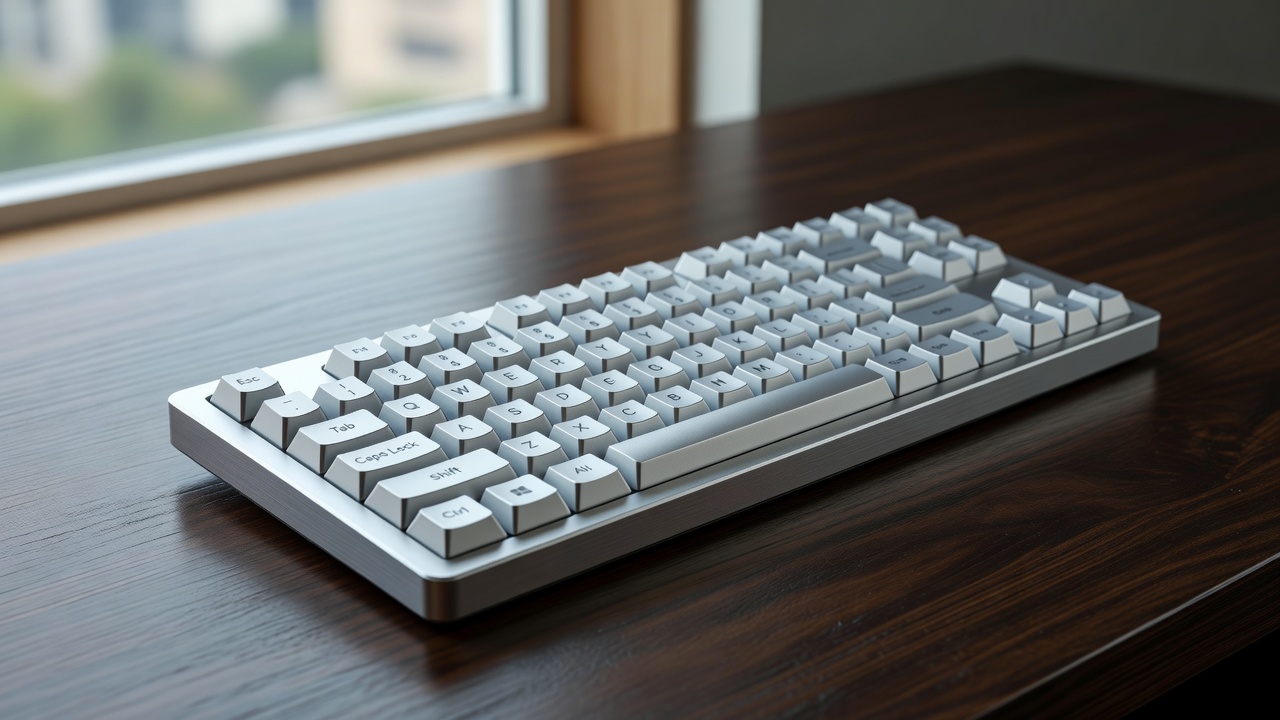
OpenAI just shipped a $230 keyboard. That sentence alone tells you where the AI arms race has landed. The company that promised to build artificial general intelligence is now selling illuminated plastic with a joystick and a reasoning dial. The Codex Micro, co-designed with Work Louder, arrives as a "command center for agentic work" — marketing language that barely conceals the truth. ChatGPT's desktop app already manages these coding agents. The keyboard exists because OpenAI needs a physical artifact. It needs to show investors, recruits, and the market that it can ship atoms, not just tokens.
The Micro is explicitly a limited run. OpenAI admitted as much to TechCrunch. This is not a product strategy. It is a signal flare. The real hardware play remains hidden inside the Bloomberg scoop from Tuesday: a portable, screenless smart speaker with "mechanical elements that can move on their own." Former Apple engineers are building it. Apple noticed. Last week Cupertino sued OpenAI for trade theft, alleging a deliberate strategy to extract confidential information and fold it into this very device. OpenAI denies wrongdoing. The lawsuit will drag through discovery, depositions, and countersuits. But the timing is damning. You do not hire a cluster of Apple's hardware veterans, announce a screenless robot speaker, and escape scrutiny.
Consider what "screenless" and "moving parts" imply. A speaker that rotates to face you. A device that nods. A physical manifestation of the assistant that lives in your pocket. This is the Jony Ive dream — ambient computing that disappears into the room — except Ive left Apple to start LoveFrom, and OpenAI hired the people who stayed. The irony is thick. Apple's lawsuit claims OpenAI stole the playbook for exactly this category of device. If true, the Micro keyboard is a distraction. A shiny bauble to occupy the press while the real product gestates in a lab somewhere south of Market Street.
The reasoning dial on the Micro deserves its own paragraph. A physical knob that adjusts how much "reasoning" — compute, time, money — an agent spends on a task. Think about that. OpenAI built a model that can allocate its own inference budget dynamically. Yet the company shipped a hardware dial so humans can override it. That is not confidence in the agent. That is anxiety. Developers who trust Codex to manage its own reasoning would not pay $230 for a fidget spinner with RGB lighting. They would use the API. The Micro exists for the managers who want to feel in control, for the demos that need a prop, for the photos that make the agent fleet look tangible.
Work Louder is a niche keyboard studio. Their collaboration signals aesthetic ambition over volume. The Micro will sell out in hours. Resellers will flip them on eBay for triple. OpenAI will call it a success. But a limited-edition mechanical keyboard does not a hardware company make. Google learned this with Glass. Amazon learned it with the Fire Phone. Meta is learning it with Quest. Hardware requires supply chains, support, returns, regulatory compliance, and a roadmap measured in years. OpenAI has none of that infrastructure. It has a partnership with a boutique keyboard maker and a lawsuit from the company that wrote the book on that infrastructure.
The Codex agents themselves are the key. Semi-autonomous coding bots that write, execute, and iterate. They need compute. They need context. They need a human who can say "go deeper" or "stop burning money." The Micro provides that human a physical lever. But the lever is a skeuomorph — a digital function dressed in aluminum. The same dial could be a slider in the app. The agent keys could be hotkeys. The joystick could be a radial menu. Every function of the Micro already exists in software. OpenAI knows this. They built the software first. The hardware is theater.
Meanwhile, Apple's complaint names names. Senior leadership. Deliberate strategy. Confidential information. These are not vague accusations. They suggest emails, Slack exports, forwarded PDFs. Discovery will reveal whether OpenAI's hardware specs bear Apple's fingerprints. If they do, the Micro becomes evidence — a product rushed to market to establish prior art, to claim the category before the lawsuit freezes development. If they don't, Apple looks like a bully using courts to kneecap a rival's supply chain. Either way, the keyboard is now a legal artifact.
The screenless device is the real bet. A speaker that moves. No screen means no visual interface — pure voice, gesture, presence. Moving parts mean motors, hinges, actuators, failure modes. This is hard engineering. The ex-Apple team knows it. They also know Apple's patents on every conceivable implementation. OpenAI's defense will hinge on whether their approach is distinct enough. Distinct from the company that trained the engineers. That is a needle threaded in a hurricane.
OpenAI's pivot to hardware is not surprising. The model layer is commoditizing. Frontier labs — Anthropic, xAI, Google DeepMind — chase the same scaling laws. Differentiation moves down the stack: chips, data centers, devices. Sam Altman has spoken openly about raising trillions for chip fabrication. The Micro is the toe in the water. The screenless speaker is the plunge. But hardware is unforgiving. You cannot patch a broken hinge over the air. You cannot roll back a motor that seizes after six months. You cannot blame the user when the device they paid hundreds for becomes e-waste because a firmware update bricked the motion controller.
The $230 price point is telling. Not $79. Not $499. Two-thirty says "premium accessory for power users." It says "we know our audience." It also says "we are not trying to sell millions." A mass-market AI device — the next iPhone, the next Echo — must land under $200 with subscription economics. The Micro has no subscription. It is a dead-end SKU. OpenAI will learn nothing about manufacturing at scale from it. They will learn about hype cycles. They already know hype cycles.
The lawsuit changes the timeline. Apple moves fast in court. Injunctions are possible. If a judge believes trade secrets migrated into the screenless device, development freezes. OpenAI may have accelerated the Micro launch to establish a public hardware footprint before an injunction lands. "We are already shipping" is a stronger position than "we are developing." The Micro's announcement date — days after the suit — is either coincidence or calendar management. Neither reflects well.
Developers should ignore the keyboard. Use the app. Build the agents. The reasoning dial is a UI element, not a capability. The agent keys are macros. The joystick is a scroll wheel. None of it improves the code Codex writes. The only signal that matters is whether OpenAI can ship the screenless device without Apple's legal shadow killing it. That device — if it exists, if it works, if it survives court — could redefine the assistant form factor. The Micro is just the souvenir you buy while waiting for the verdict.