Key Takeaways
- Hallmark's $29 PlayStation ornament replicates the original console's startup chime — a sound Sony itself is busy erasing from the living room
- The ornament's disc drive is a petty, plastic middle finger to PlayStation's all-digital future
- Nintendo dominate Hallmark's 2026 slate while Xbox sits out, revealing which brand actually owns the holiday shelf
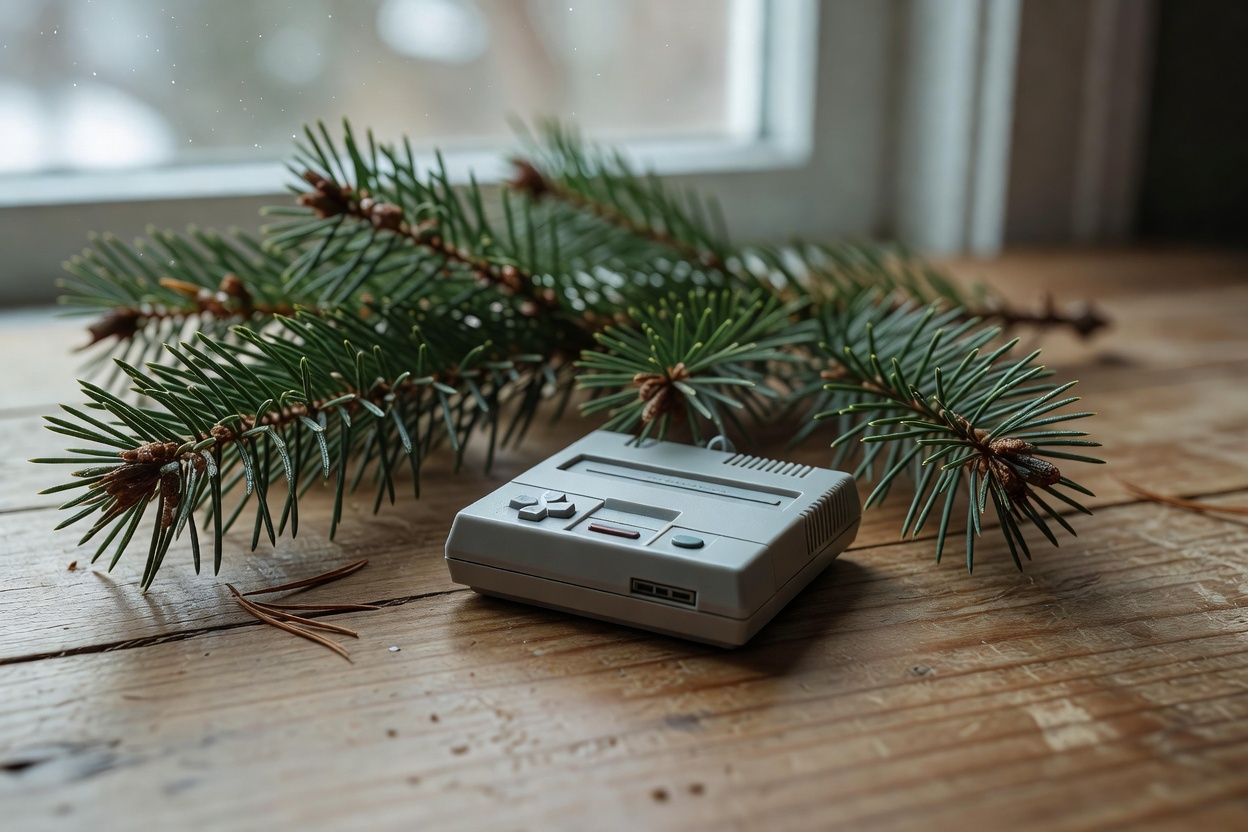
Hallmark has done the impossible: it made a PlayStation product that respects physical media. The 2026 Keepsake Ornament — four inches of injection-molded nostalgia — ships with a working Open button, a molded disc tray, and the original startup bong that once signaled a generation's bedtime surrender. Press the Power nub and a green LED flickers while that chime rings out from a speaker no bigger than a shirt button. Three LR44 cells keep the magic alive. Sony, meanwhile, is busy shipping the PlayStation 5 Pro without a disc drive and calling it progress.
The ornament is exclusive to Hallmark's storefront, $28.99, and it sells out because collectors treat these things like sovereign debt. Artist Orville Wilson crammed every port, vent, and button onto the chassis — AC jack, AV multi-out, even the parallel I/O that nobody used. The wired controller sits molded into the controller port, cable draped in permanent connection. It is a more honest PlayStation than the one currently on shelves. That is the joke. That is also the indictment.
Hallmark's Premiere week dumped 250 new SKUs onto the calendar. A second wave of 150 hits in September. The volume is obscene. Most land on Amazon the same day. Nintendo owns the back half of the catalog: a Yoshi ornament that rocks on a motorized base like the old Hatchin' toy, a Santa Pikachu tree topper perched on a light-up Poké Ball. These move. They glow. They play sounds. Xbox appears nowhere in the new drop. Hallmark's PR will remind you they did an original Xbox ornament years ago that played the Halo theme. Past tense. The brand that once bought shelf space with marketing budgets now watches from the parking lot.
The PlayStation ornament's disc drive is the sharpest detail. It does not open. It cannot open. It is a painted groove on a plastic clamshell. But its presence argues that the original console's identity was inseparable from the act of inserting a disc — the clack, the spin-up, the wait. Sony's current strategy treats that ritual as friction to be removed. Hallmark, a company that sells sentiment by the cubic inch, knows better. They put the drive on the ornament because the drive is the memory. The sound is the memory. The wired controller is the memory. Every detail the modern console shed is the detail collectors will pay to hold.
This is the nostalgia industrial complex at full throttle. It does not preserve history; it merchandises the feeling of history. The ornament's startup chime is a sample, likely compressed to 8-bit, triggered by a tactile switch that costs pennies. The green LED is a 0603 SMD. The batteries are alkaline because lithium would violate shipping rules. None of that matters. The object works as a talisman. You press the button. The sound plays. For three seconds you are twelve years old again, sitting on carpet, waiting for the Memory Card screen. That transaction — $29 for a time machine — is the only honest commerce left in gaming.
Sony could have made this. They could have released a first-party replica, numbered, boxed in the original's gray corrugate, with a licensed BIOS dump and a real disc motor. They chose a digital-only flagship and a Portal remote-play brick. Hallmark filled the vacuum. A greeting-card company now curates PlayStation's material legacy more faithfully than PlayStation does. That should embarrass the platform holder. It will not. The ornament will sell out. The next wave will add a PlayStation 2 slimline with a working tray eject. The year after, a PS3 fatboy with a spinning spider-font logo. Each one will cost thirty dollars. Each one will ship with button cells. Each one will outsell the digital-only hardware it memorializes.
The collector economy runs on scarcity manufactured by the same companies that erased the abundant original. Hallmark's "first time adapting a PlayStation console" language is marketing-speak for "we finally got the license." The license came late because Sony protects its IP like a dragon — except when the royalty checks clear. Then the dragon becomes a landlord. Hallmark pays rent. We pay Hallmark. The sound plays. The light flashes. The disc drive stays shut forever, molded shut, a promise kept in plastic that the industry broke in silicon.