Key Takeaways
- China just became the second nation to land an orbital booster on a ship, and it plans to reflight the same hardware before New Year's
- The catch: a net strung across a recovery vessel replaces SpaceX's landing legs — different engineering, same economic logic
- National-security walls keep Chinese rockets out of Western launch markets, but they don't stop Chinese constellations from undercutting Starlink across the Global South
- SpaceX's real moat isn't Falcon 9 anymore — it's whether Starship flies before Beijing's reusable Long March fleet reaches cadence
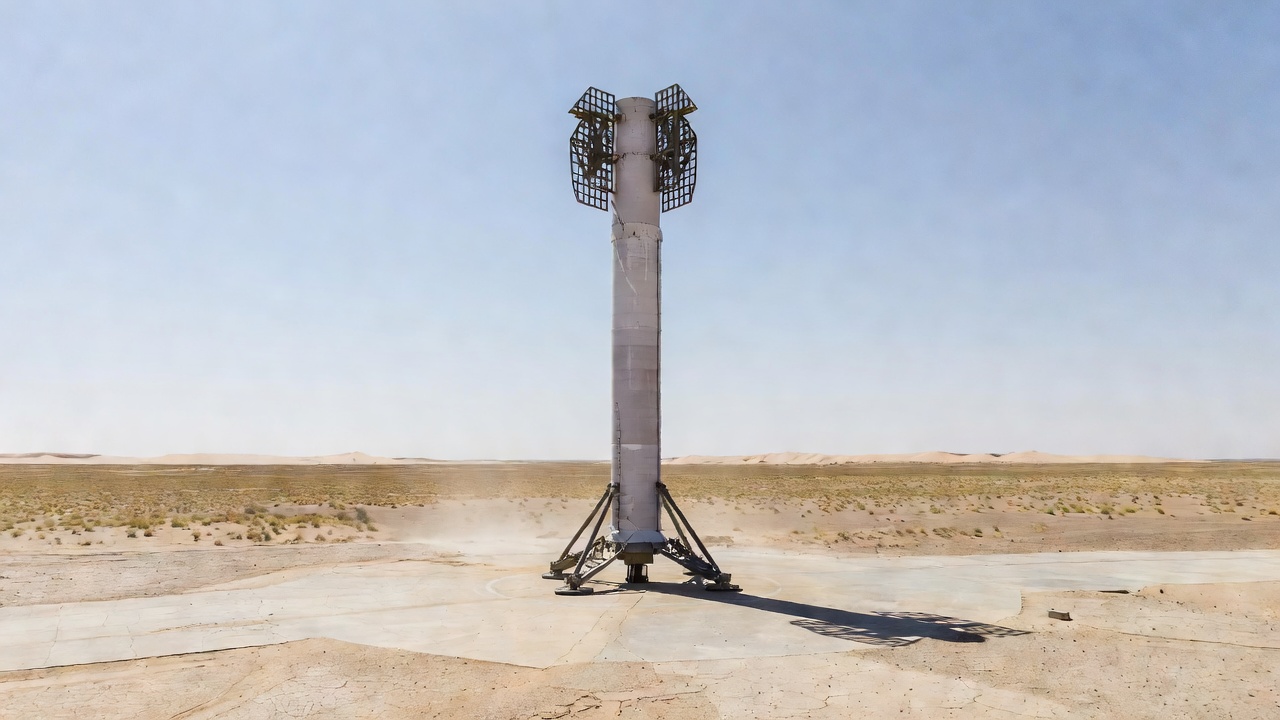
China's state-owned space contractor caught a falling rocket in a net. That sentence would have sounded like satire five years ago. On Friday it became record. The Long March booster touched down on a seagoing recovery vessel, making China the only country besides the United States to return an orbital first stage intact. The Aerospace Science and Technology Corporation says it will refly the same metal before December. If they pull it off, the cost curve that made SpaceX dominant bends toward Beijing.
The method matters. SpaceX unfolds legs and sticks a propulsive landing on a drone ship. China drapes a giant net across a frame and snags the booster mid-descent. Different physics, same ruthless arithmetic: reuse the expensive part, amortize it across dozens of flights, underprice everyone else. The net demands guidance software that can thread a needle at Mach 6, engines that relight after screaming through reentry, structures that survive the slap of capture. CASC just proved it has all three.
SpaceX currently launches at a cadence no one else touches. Falcon 9 boosters fly, land, fly again — sometimes within weeks. That tempo builds Starlink, feeds NASA, props the Space Force. But the market is bifurcated. ITAR and its Chinese equivalents wall off the Western launch customer base from Chinese rockets. CASC doesn't need to bid for Intelsat or OneWeb contracts. It needs to launch Chinese constellations — Guowang, Honghu, the orbital data centers Beijing has sketched in five-year plans — cheap enough and often enough to own the Global South.
That is where the fight moves. Starlink's terminal cost drops when launch cost drops. So does Guowang's. Africa, the Middle East, Southeast Asia: these markets buy bandwidth, not flags. A reusable Long March lets China price capacity below SpaceX's floor without subsidies. The strategic kicker arrives in the same week investigative journalists documented China-Russia coordination to degrade Starlink over Ukraine. The reusable rocket isn't a parallel track. It's the supply line for the same campaign.
The U.S. military's space advantage has always been cadence. Reusable launch broke the bottleneck. If China matches cadence, the bottleneck reforms — this time with two adversaries feeding it. The Space Force knows this. Its budget requests now name "assured access" as a capability, not a given.
Starship is the wildcard. A fully reusable, 150-ton-to-orbit vehicle would reset the economics so violently that Falcon 9 parity becomes irrelevant. The last orbital attempt ended in a fireball over the Indian Ocean. A static fire of the Super Heavy booster lit clean today. Musk says the next stack flies this month. If it reaches orbit and returns both stages, the gap yawns wide again. If it doesn't, China's net-caught Long March becomes the world's only operational reusable heavy lifter outside Hawthorne.
Blue Origin recovered a New Glenn booster in 2025 and reflight it this spring — proof the physics works beyond SpaceX. Then a pad explosion in May grounded the program. Rocket Lab's Neutron and Stoke Space's Nova both target reusable first flights this year. The U.S. has depth. What it lacks is certainty.
China's net landing wasn't a stunt. It was a threshold crossed. The question isn't whether CASC can refly the booster — they've telegraphed the timeline and the hardware. The question is whether they can sustain the tempo. One reflight is a demo. Twenty a year is an industry. SpaceX took five years to climb that curve. China's state-directed model can compress schedules, but it cannot compress physics. Engines still fatigue. Sensors still drift. Nets still tear.
The geopolitical signal is louder than the telemetry. Beijing just demonstrated it can recover the most expensive component of orbital access on sovereign terms, with sovereign supply chains, for sovereign constellations. That capability, duplicated across the Global South, rewrites the terms of connectivity. Starlink faces its first structural competitor not in a Western boardroom but in a Chinese shipyard.
Musk's response is Starship. Everything else is rear-guard. The net is in the water. The clock is running.