Key Takeaways
- Apoorv Shankar, ex-Ultrahuman hardware VP, raises $5.5M to build AI interfaces that execute tasks, not just record them
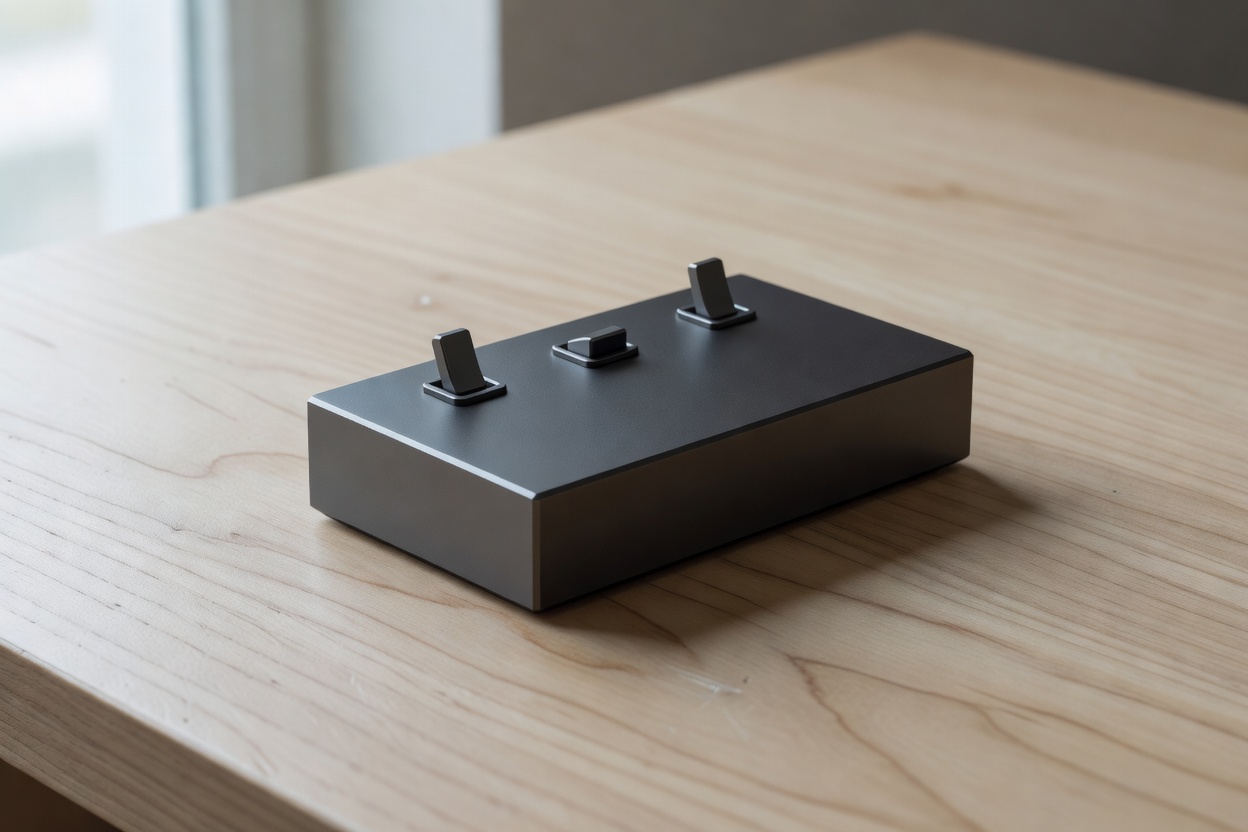
- First product Dune is a three-key macro keypad that controls meeting hardware and triggers scripts based on active app context
- User testing killed two companion devices — a tabletop remote and a single-tap agent button — folding their features into Dune
- Next device will reject the passive "always-listening" form factor dominating the category
The AI hardware gold rush has produced a mountain of listeners. Rings that transcribe. Pins that summarize. Glasses that watch. Credit-card pucks that hover. They all share one assumption: the primary value of an AI interface is capturing what happens around you. Apoorv Shankar disagrees. The former Ultrahuman hardware VP just closed $5.5 million to prove that the next interface should control agents, not record humans.
Redstart Labs and 360 ONE led the round. WhatsApp's new head Kunal Shah, Razorpay's founders, and Scribd's Tikhon Bernstam wrote personal checks. That cap table signals something unusual for a pre-product hardware startup: operators betting on a thesis, not a demo. Shankar's thesis is straightforward. The current crop of AI wearables — Rabbit, Humane, Plaud, Bee, Friend — disappointed him. They promised agency. They delivered transcription. He left Ultrahuman last year to build the alternative.
His startup Aina, formerly Project Mirage, launched three devices into user testing simultaneously. Dune: a three-key macro keypad that mutes microphones, toggles cameras, and fires context-aware shortcuts depending on which application sits in focus. Radiance: a tabletop dial-and-button remote for video calls. Shift: a single physical button that triggers an AI agent to execute a repeated workflow. The market spoke fast. Dune won. Radiance and Shift died. Their features folded into the keypad.
This is the first honest signal I've seen from the AI hardware category. Most founders fall in love with a form factor — ring, pin, pendant — then hunt for a use case. Shankar built three form factors, watched users ignore two, and killed them. Dune ships first not because it's the final vision but because it's the fastest learning vehicle. The keypad sits on a desk. It has no microphone. It doesn't listen. It waits for the user to press a key that says "mute," "summarize," "execute the quarterly-report script," or "handoff to the coding agent." The context awareness comes from the host machine, not onboard sensors. That architectural choice keeps Dune cheap, private, and legible.
But Dune is a bridge product. Shankar admits it. The next device — currently in closed testing with a select group — will not be a passive context-capture gadget. His phrasing is deliberate: "not a passive context capture gadget." That phrase describes the entire funded category. Plaud's notetaker. The Sandbar ring. Even Meta's Ray-Bans. They all default to ingest. Shankar argues the default should be egress: user intent flowing outward to agents that act.
The distinction matters. Passive capture creates data debt — hours of audio someone must process, summarize, secure, and eventually delete. Active control creates leverage — one keystroke replaces a workflow. In an enterprise setting, leverage scales. Data debt compounds. Shankar's angel investors understand this. They run products where leverage is the metric. WhatsApp measures messages sent, not messages received. Razorpay measures transactions completed, not payment attempts logged.
Aina's challenge is not technical. Macro keypads exist. Scripting engines exist. Agent frameworks exist. The challenge is behavioral. Can a physical device earn permanent desk real estate in a world of keyboard shortcuts, voice commands, and on-screen buttons? Stream Deck proved yes for creators. Elgato proved yes for streamers. But those are niche professional tools. Aina targets knowledge workers broadly — the same cohort drowning in meetings, context-switching, and administrative sludge. If Dune saves ten minutes daily, it stays. If it saves two, it becomes a paperweight.
Shankar's Ultrahuman pedigree cuts both ways. He knows supply chains, firmware, certification, and the brutal economics of consumer hardware. He also carries the ring form factor's baggage. Ultrahuman builds smart rings. Rings are passive by geometry — they sit on a finger, suited for sensing, terrible for actuating. Shankar had to leave to escape that gravity. His pivot to a keypad is a rejection of his former company's physics. That takes courage. It also means he's fighting the last war. The next war is form-factor-less: agents that live in the OS, triggered by intent signals from anywhere — wrist, voice, gaze, keystroke, neural. A keypad is a transitional interface. It assumes the human still initiates. The endgame assumes the agent anticipates.
The $5.5 million buys time to discover where that boundary lives. Not much time. Hardware runways are measured in manufacturing cycles, not software sprints. Aina's discipline — killing two products before launch — suggests they respect that clock. Most hardware startups don't. They ship the wrong thing, then iterate in public with customer money. Shankar iterated in private with his own money. That difference alone makes Aina worth watching.
The category needs a control-oriented success. Too many listening devices have raised too much money on the promise that captured data becomes utility. It rarely does. The data sits. The utility requires a second step — a human or agent acting on it. Shankar wants to collapse the steps. Press key. Agent acts. Outcome arrives. No transcript. No summary. No "insights dashboard." Just done. If that loop works, the form factor becomes irrelevant. Keypad today. Wristband tomorrow. Neural link next decade. The interface is the intent, not the plastic.
Watch the next device. Not Dune. Dune is the probe. The follow-on will reveal whether Shankar has found a genuine new primitive or just a better macro pad. The investors bet on the primitive. I'm skeptical the primitive lives in a desk accessory. But I'm glad someone is finally building toward control instead of capture. The category has been listening long enough.