Key Takeaways
- The FCC just banned imports of Chinese-made humanoid robots, robot dogs, and solar inverters — three product categories at wildly different maturity levels — under a single "national security" justification
- Power inverters are the real story: millions already sit in American homes, connecting rooftop solar to the grid, while humanoid robots remain a rounding error in global shipments
- The ban extends the same ownership-risk logic used against TikTok and Huawei: Beijing can compel any Chinese company to spy or sabotage, so the mere fact of Chinese manufacture is disqualifying
- China's "all measures necessary" response and a looming Xi-Trump summit suggest this is opening leverage, not final policy
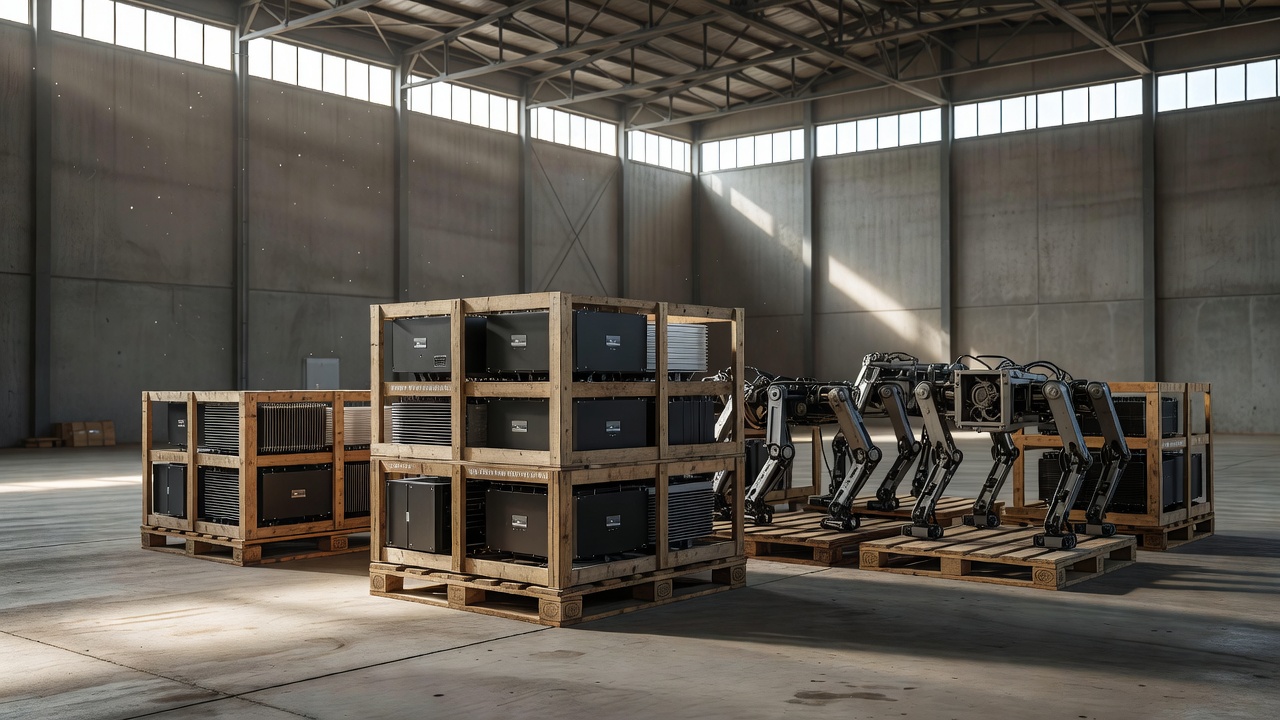
The Federal Communications Commission did not bother distinguishing between a robot dog that patrols a warehouse and the inverter that feeds your rooftop solar into the grid. It banned both on Tuesday. New imports of foreign-made humanoid robots, quadrupedal robots, and power inverters are now presumptively illegal in the United States. The stated reason: any device manufactured overseas — read, in China — could be remotely controlled, surveilled, or weaponized by a foreign government.
The sweep is deliberate. Humanoid robots shipped globally in 2025 numbered roughly 15,000 units. China's two largest producers accounted for most of them. These machines are research platforms, not consumer products. They stumble through lab demos. They do not guard borders or patrol substations. Banning them on national-security grounds is the regulatory equivalent of banning imported particle accelerators because someone might weaponize the beam.
Robot dogs are slightly further along. They inspect pipelines. They carry sensors into radiation zones. The market is niche, the volumes tiny, the Chinese share dominant. The FCC treats them as equivalent to the inverter bolted to your basement wall.
That inverter is the category that matters. Millions of them operate in American homes right now. They translate DC from solar panels into AC the grid accepts. They talk to utilities. They accept firmware updates. They sit at the edge of the distribution network — millions of addressable endpoints, many made by Chinese firms that dominate global supply. The FCC explicitly exempted existing installations. The ban applies only to new imports. But the signal is unmistakable: the device that connects your roof to the grid is now a presumed weapon.
The logic is not new. The same ownership-risk doctrine justified forcing TikTok into American hands, banning Hikvision and Dahua cameras, and blocking a swath of consumer routers. The argument: Chinese law compels cooperation with state intelligence. Any Chinese company can be ordered to exfiltrate data, plant backdoors, or brick devices on command. The United States claims parallel authority under the CLOUD Act and other statutes. The distinction is that Washington has not — publicly — exercised it at scale against domestic manufacturers.
Beijing called the bluff. A Foreign Ministry spokesperson promised "all measures necessary" to protect Chinese businesses. The phrasing is deliberate. It mirrors the language the FCC used: "unacceptable risk." Both sides now speak in the vocabulary of existential threat. The September summit between Xi Jinping and Donald Trump in Washington will not be a trade negotiation. It will be a test of which side blinks first on the definition of "national security."
The FCC left an escape hatch. Exceptions will be granted if the government finds a device poses no risk. That is not a standard. It is a licensing regime. Every Chinese manufacturer now needs a political waiver to sell inverters, robot dogs, or humanoids in America. The process will be opaque, discretionary, and slow. It hands the FCC de facto industrial policy over three unrelated sectors.
American solar installers will feel the inverter ban first. Supply chains are tight. Chinese inverters compete on price and availability. European and domestic alternatives exist but cannot scale overnight. Projects will stall. Costs will rise. The FCC knows this. It accepted the collateral damage because the ownership-risk doctrine admits no proportionality test. A device is either trusted or it is not. The inverter in your basement shares a manufacturer with the camera on a Xinjiang checkpoint. That is sufficient for the ban.
Humanoid research will feel it differently. University labs and corporate R&D teams import Chinese platforms because they are the only ones shipping at volume. The ban cuts off the hardware that lets American engineers train the control software that might someday make humanoids useful. The FCC has decided that the risk of a Chinese-made research robot — a machine that falls over when you sneeze — outweighs the cost of slowing American robotics.
Robot dogs sit in between. They do real work. They carry real sensors. They operate in critical infrastructure. A compelling case exists for scrutinizing their supply chain. The FCC did not make that case. It lumped them with the humanoids and the inverters under a single order, as if the threat model were identical. It is not. A compromised inverter can destabilize a regional grid. A compromised robot dog can spy on a refinery. A compromised humanoid can embarrass a lab. The FCC treated them as the same threat because they share a country of origin.
That is the editorial truth of Tuesday's order. The FCC has stopped evaluating devices and started evaluating passports. The ownership-risk doctrine is now a blanket import barrier. It applies to mature infrastructure equipment, emerging industrial tools, and experimental research platforms alike. The exception process will become the real policy. Who gets a waiver, how fast, and under what political conditions will determine whether American solar keeps growing, whether American robotics keeps pace, and whether the Xi-Trump summit produces a deal or a deeper rupture.
The ban is not about robots. It is not about inverters. It is about the principle that Chinese manufacture is presumptively hostile. That principle now governs the border. The devices are just the first casualties.