Key Takeaways
- Zoox secures the first commercial exemption for steering-wheel-less robotaxis, firing the starting gun on a regulatory precedent Tesla will exploit
- Uber's $10 billion AV commitment isn't investment — it's a survival bet that reduces the company to a capital allocator for other people's technology
- Moove's $250 million raise at a $2.1 billion valuation signals fleet operators are becoming the new power brokers in autonomous mobility
- The NHTSA exemption expires in two years; the industry has 730 days to prove robotaxis work at scale before Washington changes its mind
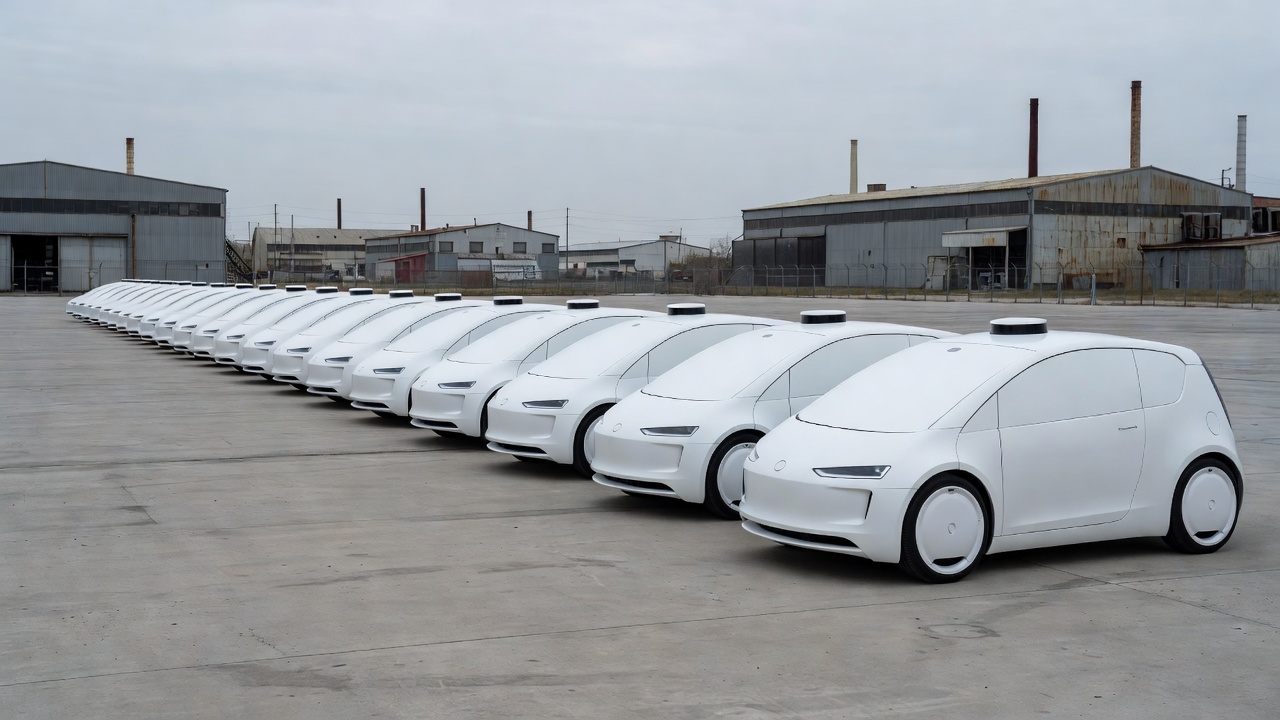
Amazon's Zoox starts charging for robotaxi rides on August 10. That sentence should terrify every legacy automaker still bolting lidar onto production sedans. The NHTSA exemption covering 2,500 vehicles without steering wheels or pedals isn't a permit — it's a precedent. Tesla's Cybercab just inherited a regulatory runway it didn't have to build. So will every startup currently designing a interior that looks like a lounge rather than a cockpit. The federal government has effectively admitted that human-control architecture is obsolete. Two years. That's the clock.
Zoox didn't win because its technology is superior. It won because Amazon's legal and lobbying apparatus knows how to write a petition that survives scrutiny. The exemption's narrowness — 2,500 vehicles, two years, specific operational design domains — reveals how fragile this victory remains. NHTSA didn't rewrite the standards. It carved a loophole. Loopholes close. The industry now has 730 days to put enough steering-wheel-less miles on American roads that Congress or a future administration cannot credibly argue the experiment failed. Every disengagement, every remote takeover, every viral video of a confused robotaxi blocking a fire truck erodes that timeline.
Uber's $10 billion figure landed with the precision of a press release. Dara Khosrowshahi matched the Financial Times' math exactly — $10 billion over "the coming years" for 120,000 driverless vehicles. That's $83,333 per vehicle if you believe the math. You shouldn't. The number includes fleet procurement, operations, insurance, mapping, and the massive subsidies Uber will pay to make robotaxi rides cheaper than human ones long after the economics should work. Uber isn't building autonomy. It's buying optionality. Waymo, Zoox, Aurora, Waabi, the list grows weekly. Uber has become a capital allocator for other people's breakthroughs. That's a dangerous place for a company that once defined the category.
The Moove transaction tells the real story. A Dubai-based fleet operator that started financing African ride-hail drivers just raised $250 million at a $2.1 billion valuation to manage Waymo's vehicles in Phoenix, Miami, Las Vegas, and eventually London. Fleet operators are the new choke point. Waymo needs someone to charge, clean, repair, insure, and stage 120,000 vehicles. Uber needs the same. Zoox will need it too. Moove, with 42,000 vehicles already across 13 countries, just proved that the messy physical layer of autonomy — the tires, the brakes, the 3 a.m. charging failures — commands a premium the software layer cannot. Mubadala didn't invest in code. It invested in operational capacity.
This reshapes the power map. The AV narrative obsesses over who solves the driving task. The money is flowing to who solves the fleet task. Waymo's partnership with Moove in London — a market with brutal regulation, ancient streets, and zero tolerance for error — suggests Google's subsidiary understands it cannot scale operations alone. Neither can Uber. Neither can Zoox. The winners of the next phase won't be the best drivers. They'll be the best landlords of metal and rubber.
Two years. The NHTSA exemption expires in August 2027. By then, either hundreds of thousands of steering-wheel-less vehicles operate commercially across American cities, or the exemption becomes a cautionary tale regulators cite when the next petition arrives. Zoox, Tesla, and every follower have 730 days to turn a regulatory exception into an industrialfact. The clock started Sunday.