Key Takeaways
- SpaceX flew its first V3 Starlinks but lost another Super Heavy booster — the second V3 booster failure in three months
- The upper stage survived reentry and floated intact, a first for Starship, giving engineers unprecedented heat-shield access
- SpaceX shares have shed nearly half their post-IPO peak value; Friday's after-hours slide signals investor patience is thinning
- The only profitable piece of SpaceX's business — Starlink — just got a hardware upgrade it can't yet orbitally deploy
SpaceX put third-generation Starlink satellites into space on Friday. It also put a Super Heavy booster into the Gulf of Mexico at supersonic speed. The booster exploded on impact. The satellites burned up twenty minutes later. This is the rhythm of the company's "fly, fail, fix" gospel: progress measured in debris fields.
The flight was the thirteenth Starship test. The twelfth never left the pad — six engines failed at ignition, forcing an abort. SpaceX swapped those engines and tried again. The booster climbed higher this time. It reached the simulated landing burn. Then it couldn't light all the engines it needed. Gravity did the rest. A faster-than-expected water impact. An explosion. The second V3 booster loss in a row; the first, in May, came apart during stage separation. Two flights. Zero recovered boosters.
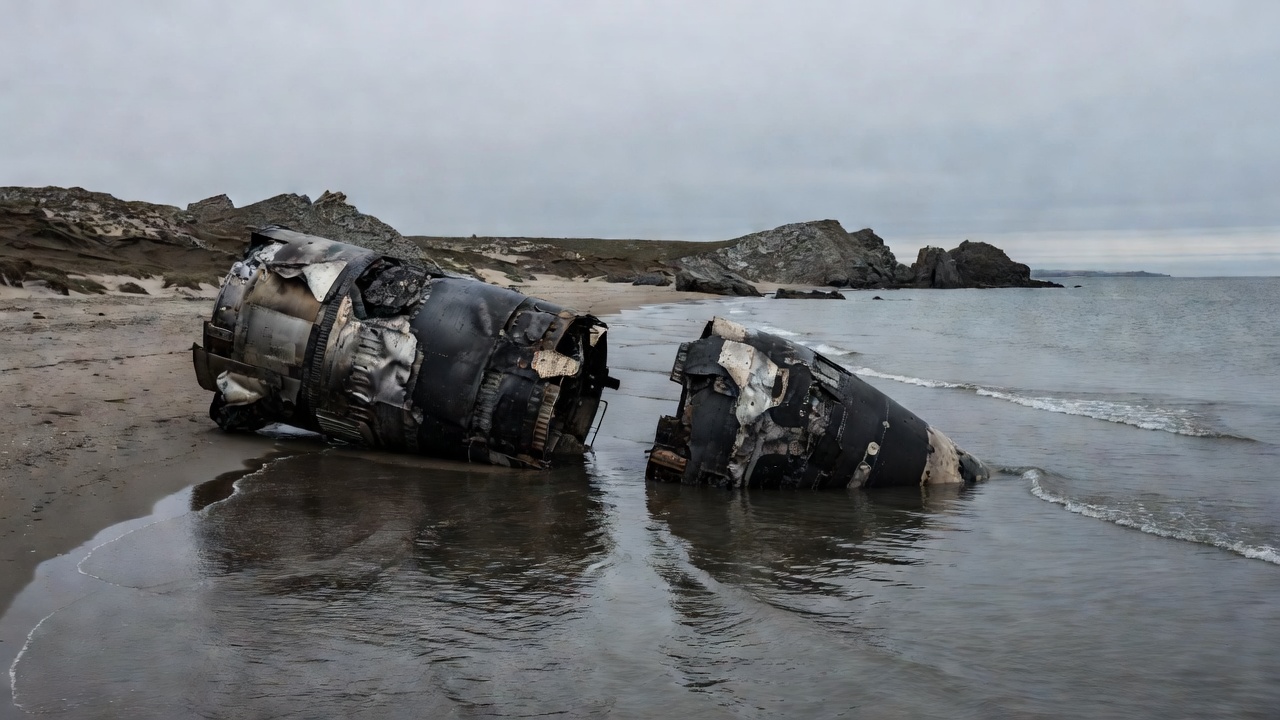
The upper stage, which SpaceX calls the Ship, told a different story. No engine loss this time. It deployed all V3 Starlinks. It survived reentry. It executed a simulated landing in the Indian Ocean and, crucially, did not explode when it tipped over. It floated. A drone photographed its heat-shield tiles while they were still wet. That alone is a datum the company has never possessed: intact thermal protection after orbital-energy reentry. Previous Ships disintegrated on contact. This one offered itself for autopsy while still breathing.
The satellites themselves never reached orbit. Starship cannot yet put payloads into orbit. They circled once, transmitted telemetry, then incinerated. But SpaceX talked to every single one. The V3 birds are bigger, heavier, more capable — and they answer when called. That matters. Starlink is the only division that prints cash. The V3 design improves the economics of a constellation that currently swallows capital faster than it generates revenue. SpaceX has said launching sixty of the new satellites per flight changes the unit economics. It has not said when Starship will actually put them where they belong.
The market is doing its own arithmetic. SpaceX went public in June in the largest IPO in history. The stock peaked above two hundred dollars. It closed Friday at one hundred fifteen. After the booster exploded, after-hours trading knocked another two percent off before buyers stepped in. The dip after last week's abort was not a blip; it was a continuation. Investors are pricing the probability that "fly, fail, fix" takes longer than the runway the IPO bought.
There is a tension in the telemetry. The Ship is maturing. The booster is not. The heat shield survived. The landing burn did not. The V3 Starlinks work. The rocket that must carry them to operational altitude does not. SpaceX replaces engines by the half-dozen and calls it iteration. But boosters are not engines. They are the structural spine of the architecture. Losing two in a row on the same vehicle version suggests a systemic gap — vibration, plumbing, control logic, something that engine swaps do not touch.
The company's public posture treats each loss as tuition. That posture worked when SpaceX was private and its shareholders were venture funds with ten-year horizons. Public markets measure quarters. They compare Starship's burn rate against Starlink's cash flow. They ask why the booster that must fly hundreds of times a year to amortize the constellation cannot survive one simulated landing in three attempts. They ask why the first orbital attempt is still a calendar unknown.
Friday's flight proved the upper stage can return whole. That is not nothing. It is a prerequisite for rapid reuse, and rapid reuse is the only math that makes Starship cheaper than Falcon 9. But the booster is the other half of that equation. A reusable upper stage atop an expendable booster is a half-solved problem. SpaceX knows this. The Gulf of Mexico knows this. The stock market is learning it.
The V3 Starlinks will fly again. They will burn up again. Each flight buys another telemetry set, another heat-shield inspection, another engine-out data point. The question is whether the booster learns fast enough to keep the capital markets from demanding a redesign before the architecture closes. SpaceX's bet has always been that speed beats perfection. The market's bet, right now, is that speed without reliability is just expensive noise.