Key Takeaways
- Florida diverts $200 million in federal EV charging funds to build 32 eVTOL landing pads
- The state ranks second in EV ownership but trails the national average in chargers per vehicle
- eVTOL market remains unproven; startups are pivoting to defense contracts
- Luxury developments and golf courses slated for first air taxi infrastructure
Florida has more electric vehicles on its roads than every state but California. It also has fewer chargers per vehicle than the national average. So the Florida Department of Transportation did what any reasonable steward of public funds would do: it took $200 million earmarked for EV charging infrastructure and decided to build landing pads for flying taxis instead.
The money came from the National Electric Vehicle Infrastructure program, part of the Bipartisan Infrastructure Law. Florida never spent it. The state's excuse was that private companies had already built a sufficient charging network. That claim doesn't survive contact with the data. Florida's charger-to-vehicle ratio sits below the national median. Drivers in apartment complexes, rental units, and older neighborhoods without dedicated parking still hunt for plugs. The private market serves the profitable corridors — highway stops, shopping centers, Tesla Superchargers — and ignores the rest. That's not a built-out network. That's a market failure dressed up as success.
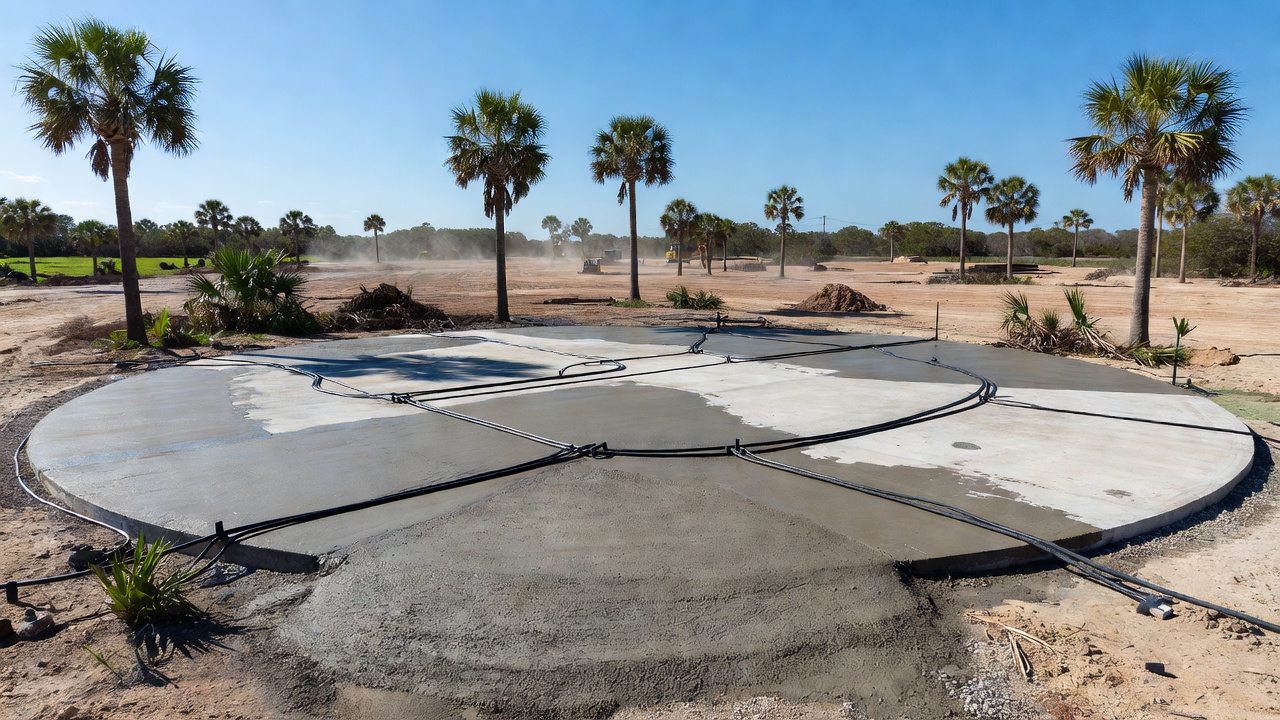
The Trump administration's updated NEVI guidance handed Florida a convenient loophole. States with "fully built out" EV charging corridors can reallocate funds toward "EV charging infrastructure on any public road or in other publicly accessible locations." Florida seized the language and ran. The state's plan envisions 32 vertiports — landing pads with chargers — at golf courses, luxury apartment towers, and regional airports. Publicly accessible, technically. Practically, they serve the demographic that already has garage charging.
Electric vertical take-off and landing aircraft remain, charitably, a nascent market. Startups like Joby, Archer, and Lilium have made engineering progress. They've also started pivoting to defense applications because the commercial certification timeline keeps stretching. The FAA has not certified a single eVTOL for commercial passenger service. Production models don't exist at scale. Battery energy density still limits range to useful-but-not-transformative hops. Florida is building infrastructure for aircraft that cannot yet legally carry paying customers.
The state's rationale: air taxis will alleviate Florida's notorious traffic. The math doesn't hold. A four-to-five passenger eVTOL replaces one car. A single vertiport handling 20 flights an hour moves 80 to 100 people. One lane of I-95 moves 2,000 vehicles an hour. You would need vertiports on every block to dent congestion. The physics of induced demand also applies — new capacity generates new trips. Helicopter shuttles in New York and São Paulo have served the wealthy for decades without reducing ground traffic by a measurable fraction. eVTOLs lower the cost per seat. They don't change the geometry.
New York and North Carolina took the same federal dollars and planted chargers in communities where renters and homeowners without assigned parking actually live. That's the program's purpose: closing the infrastructure gap that keeps EV adoption skewed toward homeowners with garages. Florida chose vertiports at luxury developments instead. The decision reveals the actual priority — not EV adoption, not traffic relief, but a headline-grabbing bet on a speculative asset class that flatters the state's self-image as a future-facing capital.
The vertiport network also creates a subsidy loop. Developers who install pads at golf courses and luxury towers gain a marketing amenity paid for by federal taxpayers. The charging infrastructure at those pads serves a theoretical fleet. Meanwhile, the nurse in Kissimmee who parks on the street still plans her week around a Level 2 charger at a Walmart parking lot. The federal program was designed to fix that imbalance. Florida just widened it.
State officials will cite economic development. They'll mention job training programs, maintenance crews, vertiport operations. Those jobs materialize if the aircraft materialize. They don't exist yet. The defense pivot among eVTOL makers suggests the first production runs go to military logistics, not commercial air taxi networks. Florida may have built 32 very expensive helicopter pads for aircraft that arrive in olive drab before they arrive in civilian white.
There's a version of this story where Florida looks prescient. eVTOL certification arrives in 2027. Battery density crosses 500 Wh/kg. Air taxi networks bloom from Miami to Tampa, and the vertiports sit ready. That version requires every assumption to break Florida's way. The version where the pads sit empty for a decade while the state's charger deficit persists requires only the status quo to hold. The status quo usually wins.
This isn't innovation policy. It's portfolio diversification with federal money. The Herald's reporting exposes a state government that looked at a genuine infrastructure gap — one the data confirms — and chose a sci-fi render over the boring work of planting plugs where people actually park. Florida's EV drivers deserve better. So do federal taxpayers. The vertiports may someday serve a purpose. Today they serve a press release.