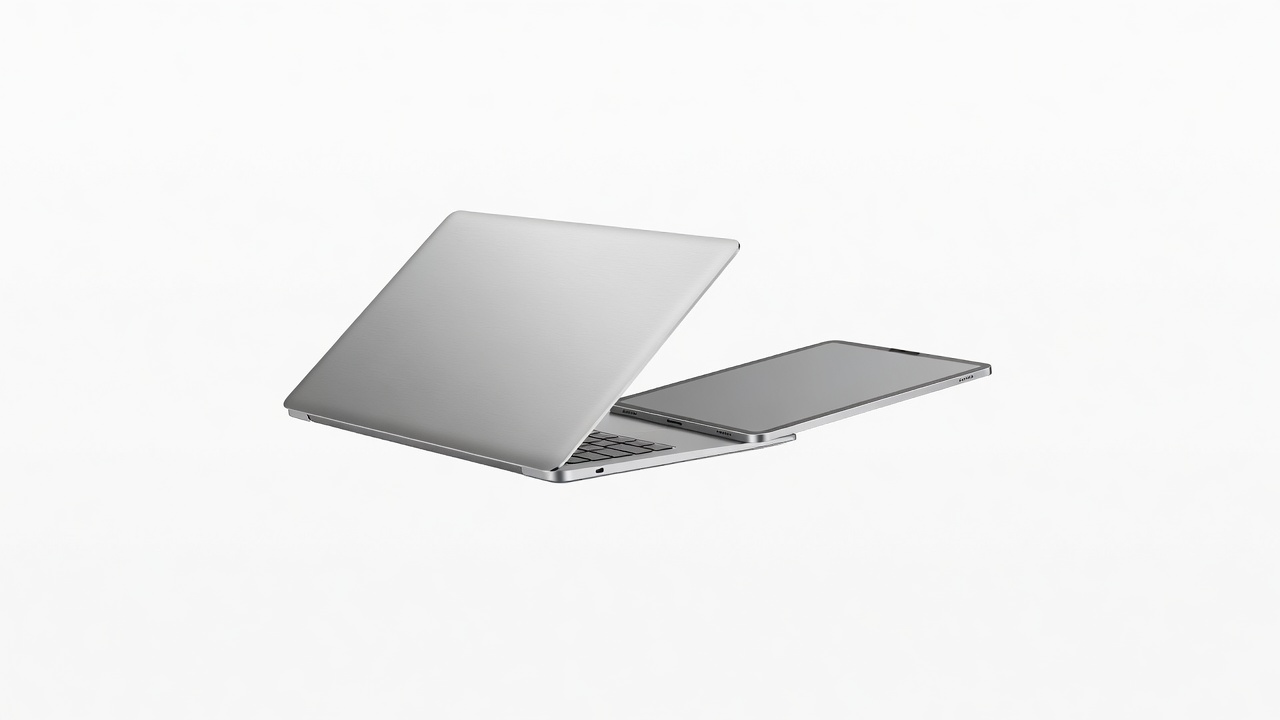
Apple is reportedly planning new iPad Pro and MacBook Pro releases early next year
Apple's product cadence has always been a masterclass in controlled scarcity. The company doesn't just release hardware; it meters out innovation like a pharmacist dispensing controlled substances — just enough to keep the faithful hooked, never so much that the high wears off. Bloomberg's latest dispatch from the supply chain telegraphs a familiar rhythm: four new iPad Pros and an "entry-level" MacBook Pro (codenamed K104) targeting the first half of 2025, alongside the debut of the M7 chip. On paper, it's a routine refresh. In practice, it's a stress test for a company navigating its most precarious transition in two decades.
The iPad Pro's identity crisis deepens
Let's start with the tablet. The last iPad Pro landed in October 2023 — a mere seven months ago. Before that, an 18-month gap. Before that, a year and a half. The irregularity isn't accidental; it's symptomatic. The iPad Pro remains a magnificent piece of hardware in search of a definitive purpose. Apple has spent six years trying to convince us that a touchscreen slab with a keyboard accessory can replace a laptop, while simultaneously refusing to let iPadOS behave like a desktop operating system. The M4 chip (assuming that's what's coming) will be blisteringly fast. It will also be wasted on an OS that still can't handle background processes, external displays, or a file system that doesn't treat users like children.
Four models suggests segmentation: two sizes, likely two tiers each. That's not innovation; it's SKU management. The real question isn't whether the new Pros will be faster — they will be — but whether Apple will finally unshackle the software. Don't bet on it. The iPad Pro exists now primarily to justify its own price point and to keep the iPad line from collapsing into irrelevance beside the iPhone and Mac. A faster chip in a straitjacket is still a straitjacket.
The "entry-level" MacBook Pro is an admission of guilt
More interesting is K104. An "entry-level MacBook Pro" is an oxymoron Apple has avoided for years — until now. The MacBook Neo (released March 2024) already blurred the line, shipping with the A18 phone chip in a laptop body. That was a confession: Apple's silicon advantage lets it recycle phone processors for computers without anyone noticing the difference. K104 takes the logic further. A "full-fledged Pro" at a lower price point implies the current Pro line has drifted too far upmarket.
Consider the evidence: the 14-inch MacBook Pro with 1TB storage jumped from $1,699 to $1,999. That's a 17.6% increase in a single generation. The 16-inch model starts at $2,499. These are not "pro" prices; they're "corporate expense account" prices. Creative professionals — the actual pros — have been squeezed out. K104 is Apple's attempt to claw them back without cannibalizing the high-margin flagship. Expect compromised ports, a lesser display, maybe last-gen silicon. But if it runs macOS properly and starts under $1,500, it'll sell. The MacBook Air proved there's endless appetite for "good enough" Apple silicon.
The M7 timeline reveals the real story
The M7's prospective H1 2025 debut is the tell. Apple's silicon cadence has been ruthlessly annual: M1 (Nov 2020), M2 (June 2022), M3 (Nov 2023), M4 (May 2024 — iPad only so far). An M7 in early 2025 would mean M5 and M6 either launch in rapid succession or get skipped entirely. Neither tracks. More likely: Bloomberg's sources are conflating the M4's Mac debut (still pending) with a future generation, or Apple is accelerating to counter Qualcomm's Snapdragon X Elite and the looming Windows-on-Arm threat.
That threat is real. Microsoft's Copilot+ PCs, for all their recall debacle, proved Windows on Arm works. Apple's moat — performance per watt — is narrowing. The M7 timeline, whether accurate or aspirational, signals urgency. Cook's supply chain mastery once meant Apple dictated the schedule. Now the schedule dictates Apple.
Post-Cook anxiety is the invisible spec
Underneath every product rumor lies the unspoken question: what happens after Tim Cook? The CEO turn is coming — not tomorrow, but soon enough that the current roadmap was likely designed with his succession in mind. Cook's Apple is operational excellence personified: predictable, profitable, risk-averse. The product lineup reflects that. Iterative chips. Incremental form factors. Price hikes disguised as "value engineering." A foldable iPhone (rumored, perpetually) would be the first genuine risk in a decade.
K104 and the iPad Pro refresh are safe bets. They protect revenue. They don't define the next era. The next CEO — whether it's Jeff Williams, Craig Federighi, or a dark horse — will inherit a company that has optimized itself into a corner: dependent on iPhone for 50%+ of revenue, vulnerable in China, stagnant in services growth, and sitting on a silicon lead that's eroding by the quarter.
What this means for buyers
If you need a MacBook Pro today, wait. The M4 MacBook Pro (likely October) and K104 (early 2025) will reset the value equation. If you need an iPad Pro, ask yourself what you're actually doing with it. The hardware has been overqualified for the software since 2018. A used M2 or M1 model does 95% of what the M4 will do for half the price.
Apple's strategy is clear: flood the zone with SKUs, raise prices on the high end, create "entry" tiers that are actually mid-range, and let the ecosystem lock-in do the rest. It's working — for now. But the M7 rumor, the K104 pivot, the iPad Pro's accelerated cadence — these aren't signs of strength. They're the twitches of a company that feels the ground shifting and isn't sure which direction to run.
The next six months will reveal whether Apple is managing decline or preparing a second act. History suggests the latter. But history also suggests the second act rarely looks like the first.