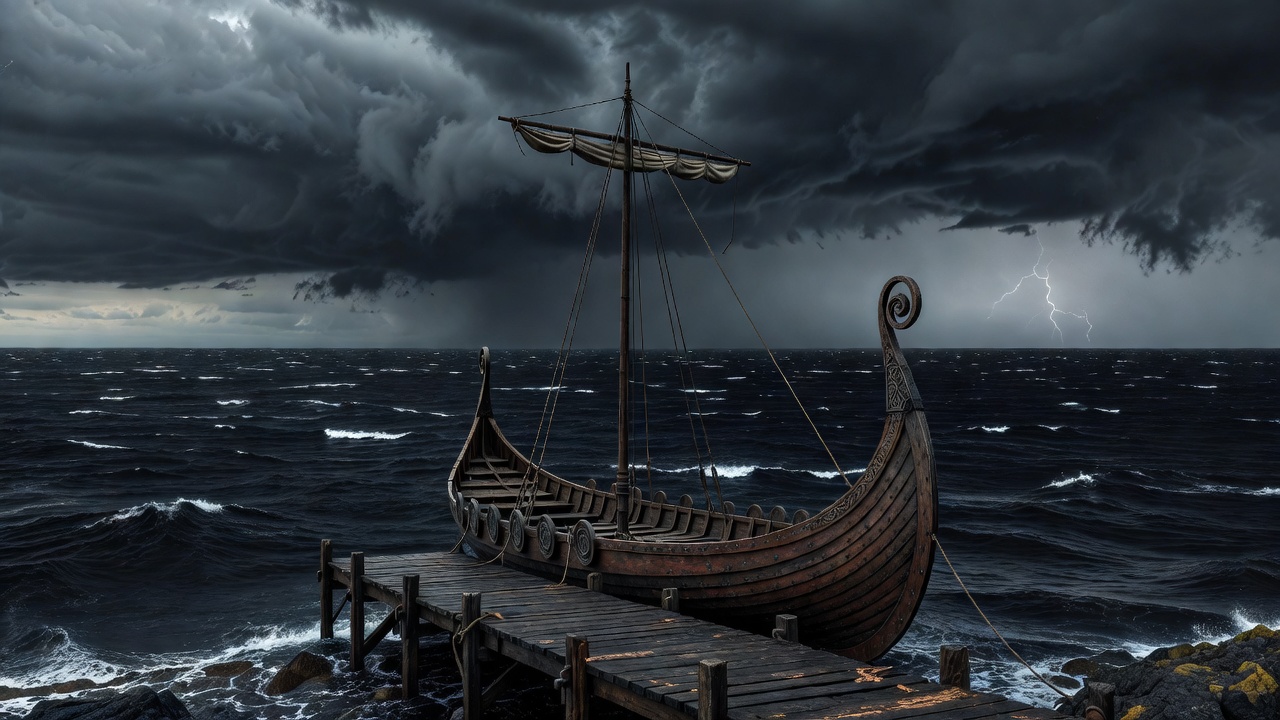
The Longship Sails Into 1.0 With A Gaping Hole In Its Hull
Five years. Ten million copies. A cultural moment that made "building a digital longhouse" a shared language across the internet. Valheim has earned its victory lap. But as Iron Gate Studio plants the 1.0 flag this September with the Deep North biome, they're doing so while explicitly admitting the oceans — the very veins of Viking existence — will remain the shallow, barren puddles they've been since day one. That's not a victory lap. That's a punt.
The Ocean Problem Isn't New, It's Foundational
Let's not pretend this is a surprise. The community has been screaming about oceans since the Mistlands update dropped in late 2022. The serpent is a novelty, not an ecosystem. The Leviathan is a mining node that swims. There's no reason to build a dock, no trade routes to patrol, no submerged ruins to explore, no dynamic weather that makes the sea a character instead of a loading screen between islands. In a game about Vikings. The seafarers. The people who reached North America centuries before Columbus in open-hulled knarrs guided by sunstones and oral tradition.
Iron Gate's FAQ line — "nothing that is specifically focused on the Oceans" — reads less like a development decision and more like a resignation letter. They've known for years this was the community's white whale. They've had five years and early access revenue that most studios would murder for. If the ocean update wasn't happening for 1.0, it was never happening. Dressing it up as "focus on the Deep North" is honest in the same way a breakup text citing "focus on myself" is honest: technically true, functionally a dodge.
What "1.0" Even Means Anymore
This is the rot at the center of modern early access. The label "1.0" used to signal feature completeness. A contract with the player: this is the game we promised. Now it's a marketing milestone. A.price hike trigger. Iron Gate's own words — "too soon to say" on both future content updates and the duration of bug fixes — vaporize that contract. They're selling a $30 "complete" game while refusing to define what complete means, how long they'll stand behind it, or whether the single most glaring omission in the design will ever be addressed.
Compare this to No Man's Sky, which launched barebones at full price but committed to a years-long redemption arc with concrete roadmaps. Or Enshrouded, currently in early access with a clear biome rollout plan. Iron Gate isn't offering a roadmap. They're offering a shrug.
Optimization: The Other Half-Truth
The studio notes 1.0 includes "optimisations to some areas" but admits large bases — the hallmark of Valheim's most dedicated players — "would not be highly impacted." Microstutter fixes and faster saves are quality-of-life patches, not engine overhauls. The Unity engine's limitations with massive entity counts are well documented; if Iron Gate hasn't cracked that nut in five years, they likely won't crack it in six. Promising post-1.0 work on performance while simultaneously saying it's "too soon to say" how long updates continue is the kind of circular logic that makes players rightfully nervous.
The Price Hike Tells The Real Story
Here's the tell: the price jumps to $29.99 at 1.0. Right now, it's half that on Steam. That's not a coincidence. That's a conversion event. Iron Gate wants the early access holdouts to convert before the label changes, because the label change is the product. The game itself? Still missing its ocean. Still chugging on megabases. Still with no guaranteed future.
If you don't own Valheim, buy it today for ten bucks. It's a masterpiece of atmosphere, progression, and co-op chaos. The first three biomes alone justify the cost ten times over. But don't buy it because 1.0 means "finished." Buy it despite 1.0 meaning "we're raising the price and calling it done."
The Viking Funeral For Expectations
Valheim deserved better than a quiet burial at sea for its oceans. The Deep North will be gorgeous — Iron Gate's biome art direction is peerless — and the final boss will give closure to the progression arc. But a Viking game where the sea is a texture, not a system, is a saga missing its middle chapters. Iron Gate built a legend. They're choosing to end it on a cliffhanger they have no intention of resolving.
Skål to the journey. But let's not pretend the ship made it home.