Key Takeaways
- Flock Safety's $7.5 billion valuation rests on surveillance contracts that are publicly unraveling
- Garrett Langley's Disrupt 2026 stage appearance follows Amazon Ring's exit and LAPD's contract lapse
- The company's ICE partnerships have triggered camera destruction and ACLU opposition
- Langley will defend AI-powered surveillance while his customer base quietly shrinks
Garrett Langley takes the Disrupt stage in October with a $7.5 billion valuation and a customer list that keeps getting shorter. That tension defines Flock Safety right now. The company built its fortune on license-plate readers and camera networks sold to police departments and federal agencies. Now the contracts are lapsing. The partnerships are ending. The cameras are being smashed.
Amazon's Ring unit walked away. The LAPD let its deal expire this month. These aren't minor accounts. They were the validation that made Flock look like infrastructure rather than experiment. When the largest consumer security brand and the third-largest police force in America both decide your technology isn't worth the trouble, the market notices. Langley will spin this as growing pains. He'll frame the backlash as the cost of innovation. The numbers suggest something simpler: the business model depends on contracts that don't survive public scrutiny.
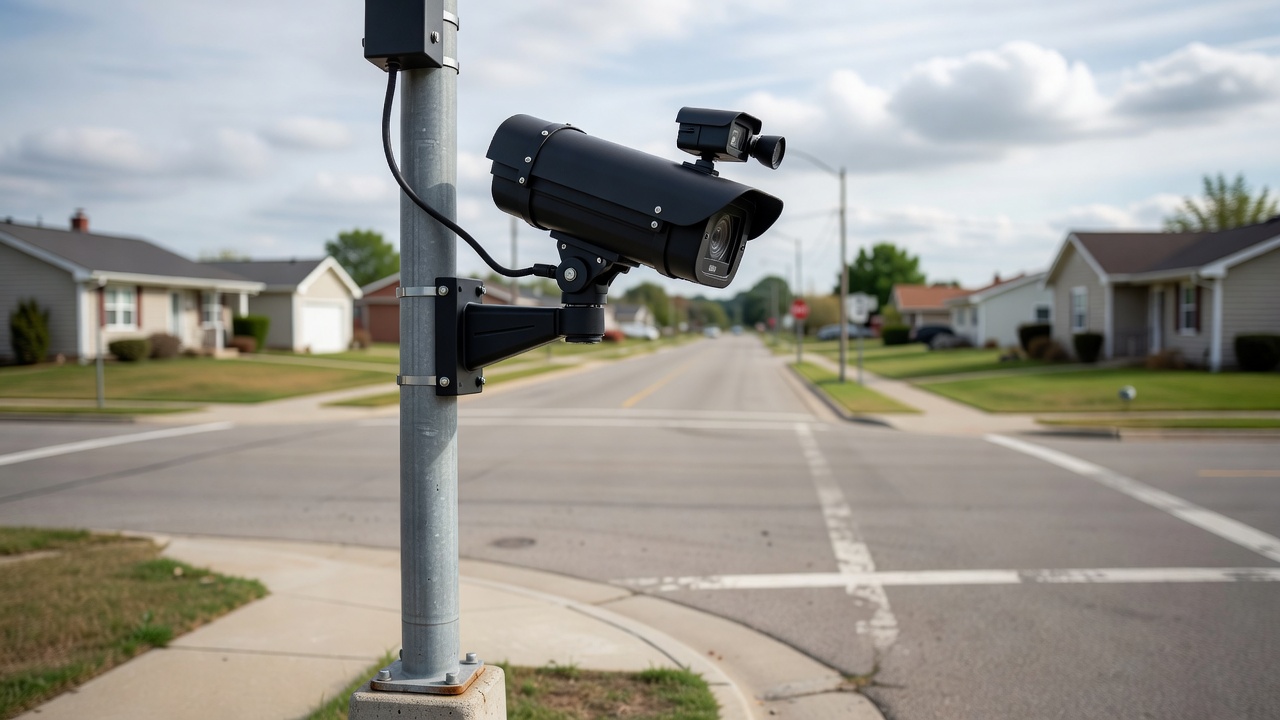
The ACLU has campaigned against Flock for years. Privacy advocates have documented the dragnet effect — cameras catching everyone, storing everything, sharing freely with ICE. That last part matters. Flock's databases feed immigration enforcement directly. The company doesn't hide this. It sells it. That decision turned surveillance equipment into political targets. People have taken axes to Flock poles in multiple cities. You don't see that with traffic sensors. You see it when communities decide a technology represents occupation rather than safety.
Langley knows this terrain. He sold Experience to Cox for $200 million in 2014. He ran engineering and design at Clutch. He understands product cycles and exit timing. Flock's trajectory — Y Combinator to $950 million raised — follows a familiar Silicon Valley script. Raise fast. Scale faster. Defer the hard questions. The hard questions arrived anyway. The drone acquisition (Aerodome) signals ambition beyond fixed cameras. First-responder drones sound like public safety. They also mean mobile surveillance that follows people into backyards and protests. The FAA hasn't settled the rules. Flock isn't waiting.
The Disrupt audience will hear a polished narrative. AI makes surveillance smarter. Smarter means safer. Patterns replace suspicion. Langley will cite response times and solved cases. He won't lead with the false positives. He won't volunteer the audit logs showing how often ICE queries the database versus homicide detectives. The distinction matters. A system built for warrant service looks different from one built for dragnet enforcement. Flock built the latter and markets the former.
Investors paid $7.5 billion for network effects. Every camera makes the network more valuable. Every contract makes the next one easier. That thesis collapses when nodes disappear. Ring's exit removes millions of data points. LAPD's lapse removes thousands. Each departure makes the next departure easier to justify. The valuation assumes inevitability. The recent history suggests optionality — customers can leave, and they are.
Langley's appearance at Disrupt is itself revealing. Companies with secure trajectories don't need to debate their critics onstage. They ship product. They compound. Flock needs the narrative reset. The conference gets a headline session. Langley gets a platform. The audience gets a show. But the cameras keep coming down. The contracts keep lapsing. The valuation keeps depending on growth that has started moving backward.
The surveillance industry has always promised that more eyes mean less crime. The evidence remains mixed. What's clear is that more eyes mean more data, more contracts, more valuation. Flock mastered that equation. Now the variables are changing. Public tolerance has a floor. Legal exposure has a ceiling. Regulatory frameworks are catching up. Illinois banned private license-plate databases. California restricted facial recognition on body cameras. More states will follow. The patchwork becomes a wall.
Langley will argue that AI solves the privacy paradox — smart filtering, automatic redaction, audit trails. Technical fixes for political problems rarely work. The ACLU doesn't oppose Flock because the filters are weak. They oppose it because the architecture exists. A system that can track every vehicle in a city will be used to track every vehicle in a city. The mission creeps. The logs get subpoenaed. The data gets breached. The promise breaks.
Disrupt 2026 will sell tickets on this session. The Moscone Center will fill with founders who want Langley's playbook. They'll hear a story about grit and vision. They should watch the customer list instead. That list tells the real story. It's shrinking. The CEO knows it. The investors know it. The audience at Disrupt will hear the future of surveillance according to Flock. The market is already voting on whether that future arrives.