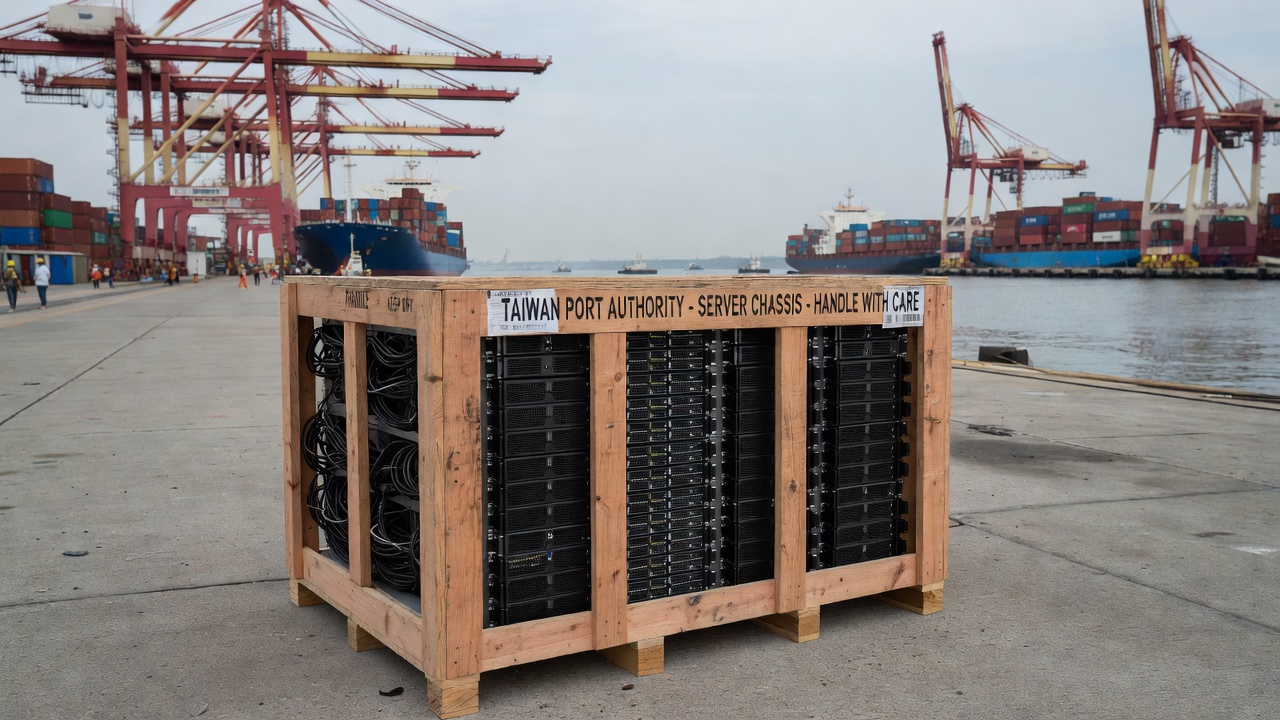
Trouble keeps finding Supermicro as strange server shipments attract police attention in Taiwan and Singapore
If you believe in coincidences, Supermicro is testing the limits of statistical probability. The server maker — once the darling of the hyperscale build-out, now a perennial headline for all the wrong reasons — finds itself under police scrutiny in not one but two Asian tech hubs over "strange shipments." The details remain hazy, deliberately so. But the pattern is crystalline: a company that has spent years dancing on the edge of compliance, transparency, and geopolitical fault lines has finally tripped over its own feet.
Let's not pretend this is new. Supermicro's relationship with trouble is less a series of unfortunate events and more a business model. The 2018 Bloomberg Businessweek story alleging Chinese spy chips embedded in Supermicro motherboards — a claim never substantiated, vigorously denied, and still contested — should have been a wake-up call. Not because the specific allegation was proven true, but because it exposed the terrifying opacity of the hardware supply chain. Supermicro's response was a masterclass in corporate crisis management: deny, deflect, sue, and wait for the news cycle to move on. It worked. The stock recovered. The hyperscalers kept buying. The questions never really got answered.
The accounting black hole
Then came the accounting scandal. In 2018, Supermicro delayed its annual report, admitted to "accounting violations," and faced delisting from Nasdaq. The SEC investigated. The company restated earnings. Executives departed. A $17.5 million settlement with the SEC followed in 2020 — pocket change for a company with billions in revenue, but a signal flare for anyone paying attention. The message was clear: Supermicro's internal controls were not merely weak; they were effectively decorative.
And yet, the enterprise market shrugged. When you're the only vendor willing to white-box custom server configurations at scale, with lead times that make Dell and HPE look glacial, customers tolerate a remarkable amount of dysfunction. The AI boom only amplified this dynamic. Nvidia's GPU allocation became the scarcest resource in computing, and Supermicro — with its tight integration into Nvidia's reference designs and its willingness to build whatever weird form factor a research lab dreamed up — became the pickaxe supplier to the gold rush. Revenue doubled. The stock quadrupled. The past was prologue, and prologue was forgotten.
Strange shipments and sovereign nerves
Which brings us to Taiwan and Singapore. Two jurisdictions that could not be more different in their geopolitical posture, yet both treating Supermicro shipments as potential national security incidents. Taiwan, where the semiconductor supply chain is quite literally a matter of existential survival. Singapore, the neutral arbiter that polices its port with the paranoia of a city-state that knows it survives on trust.
Police don't raid server shipments over paperwork errors. They raid them when intelligence suggests dual-use technology, sanctioned end-users, or transshipment routes designed to evade export controls. The "strange" qualifier in reporting is doing heavy lifting: it implies manifests that don't match contents, destinations that don't match buyers, or configurations that have no legitimate commercial purpose.
Supermicro's statement — the inevitable "we cooperate with authorities" boilerplate — is notable for what it doesn't say. No denial of wrongdoing. No explanation of the shipments. No identification of the end customers. Just the passive voice of a company that has learned silence is safer than narrative.
The China problem that won't go away
Here's the uncomfortable reality: Supermicro's manufacturing footprint, supply chain dependencies, and historical customer base make it uniquely vulnerable to the U.S.-China tech war. The company was founded in Silicon Valley but built its scale on contract manufacturing in Taiwan and China. Its majority shareholders, the Liang family, maintain deep ties to Taiwan's tech ecosystem. Its largest customers have included Chinese telecom giants and state-affiliated entities. Every server that moves through its channels carries a geopolitical payload whether anyone acknowledges it or not.
The Biden administration's escalating export controls on AI chips — H100s, H800s, A800s, now the B200 cascade — created a massive incentive structure for gray-market diversion. Singapore has already prosecuted cases involving Nvidia chips transshipped to China via shell companies. Taiwan has intercepted motherboards bound for sanctioned entities. Supermicro sits at the exact intersection of these flows: it buys the allocated GPUs, integrates them into systems, and ships them globally. The opportunity for "strange" diversions is structural.
Complicity or incompetence?
The charitable reading: Supermicro grew too fast, hired too few compliance officers, and lost visibility into a distribution network that spans dozens of distributors, integrators, and regional partners. The uncharitable reading: willful blindness is a feature, not a bug. When your revenue depends on moving maximum volume through minimum oversight, you don't ask questions you don't want answered.
History suggests the truth lives in the squalid middle. Supermicro's board includes former intelligence and defense officials — a revolving door that signals awareness of the stakes. Its audit committee was reconstituted after the accounting scandal. It has the governance architecture of a compliant company. But governance is theater until it constrains revenue.
The coming reckoning
This time feels different. The AI boom has drawn sovereign attention to the hardware layer in a way the cloud boom never did. Governments now understand that model weights live on servers, servers run on chips, and chips move through companies like Supermicro. The "strange shipments" in Taiwan and Singapore aren't isolated incidents — they're the visible portion of a scrutiny iceberg that now extends to every jurisdiction with a port, a data center, or a national security council.
Supermicro's survival strategy has always been velocity: move faster than the questions can form. But the questioners have accelerated. The DOJ, Commerce Department, and their allies in Taipei and Singapore aren't reading quarterly reports — they're watching supply chains in real time. The company's next earnings call will feature analysts asking about "geopolitical headwinds" and management offering vague assurances about "enhanced compliance."
Don't believe it. The only cure for structural opacity is structural transparency: published customer due diligence, real-time shipment tracking, independent supply chain audits, and a board willing to sacrifice revenue for integrity. Supermicro has shown zero appetite for any of it.
Trouble doesn't "find" companies. Companies build the roads trouble drives in on. Supermicro has been paving that highway for two decades. The police in Taiwan and Singapore are just the latest toll collectors. The bill is coming due.