Key Takeaways
- Tesla quietly abandoned its 2026 volume-production targets for Cybercab, Semi, and Megapack 3
- Capital expenditures more than doubled while free cash flow turned negative
- Musk admits Optimus robot is "hardest product to scale manufacturing" Tesla has ever attempted
- Record international EV deliveries mask a deteriorating core business model
Tesla did not announce the delay with a press release. It buried the news in a shareholder letter, stripping out the phrase "volume production" for three flagship products and hoping analysts would miss the excision. They didn't. The Cybercab, the Semi, and the Megapack 3 — each pitched as a pillar of Tesla's transformation from car company to AI empire — have all slipped beyond 2026. The Optimus robot lost its volume-production language entirely. This is not a schedule adjustment. It is a strategic retreat disguised as a preamble.
The numbers tell the real story. Capital expenditures more than doubled year over year. Free cash flow went negative. Net income fell 5 percent to $1.1 billion even as revenue jumped 26 percent to $28.2 billion. Tesla is spending like a growth stock while earning like a mature industrial. CFO Vaibhav Taneja has already warned that negative cash flow will persist through year end. The market cheered the revenue beat; it should be interrogating the burn rate.
Musk's conference-call candor about Optimus was the only honest moment in the disclosure. "Everything on the robot is new," he said. That admission applies equally to the 4680 battery cell, the Cybercab's manufacturing line, the Semi's powertrain. Tesla is trying to scale multiple first-of-kind technologies simultaneously while its core auto business contends with price wars, margin compression, and a aging model lineup. The 4680 cell — promised as the key to cost parity — remains a bottleneck. Without it, the Cybercab and Semi stay trapped in prototype purgatory.
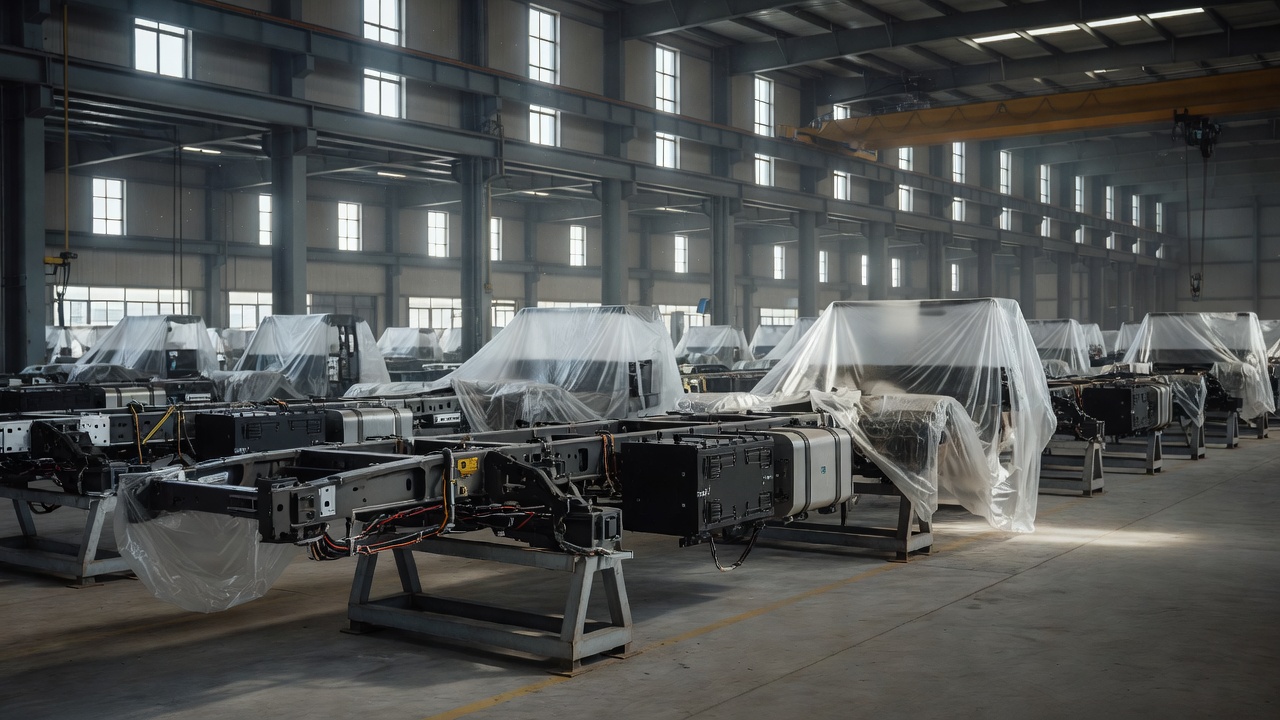
Austin produced its first Cybercabs this year. That sounds like progress until you read the fine print: manufacturing lines for the Semi and Optimus are still being built. "Building out" is corporate speak for "we haven't figured out how to make this at scale." The January promise of 2026 volume production for all three products wasn't ambitious. It was fiction. Tesla's track record on timelines — Full Self-Driving next year, Robotaxi in 2020, Semi in 2019 — makes the new silence on dates the only credible signal.
The automotive segment delivered 480,000 vehicles, up 120,000 sequentially, driven by record sales in South Korea, Australia, Colombia, Japan, Taiwan, Thailand, Portugal, the Philippines, Chile, Slovenia, and Lithuania. That geographic dispersion is impressive. It also reveals dependence on market-by-market conquest rather than product-cycle strength. The Model Y refresh and Model 3 Highland helped. But average selling prices remain under pressure, regulatory credits are drying up, and the next platform — the rumored $25,000 vehicle — keeps receding.
Energy generation and storage revenue grew. Services and other revenue grew. Neither offsets the capital intensity of the AI pivot. Megapack 3's delay is particularly telling: stationary storage uses proven cell chemistry, yet Tesla pushed its volume timeline anyway. That suggests factory bandwidth, not chemistry, is the constraint. The Lathrop and Nevada expansions are consuming capital faster than they generate returns.
Shareholders are funding a venture portfolio inside a public company. The board has not articulated a hurdle rate for these bets. The market has not demanded one. At $28 billion quarterly revenue, Tesla is too large for sympathy capital but too dependent on narrative for fundamental valuation. The disconnect widens each quarter.
Musk wants Tesla valued as an AI and robotics company. AI and robotics companies trade on optionality, not EBITDA. But they also raise primary capital at venture terms, not public-market terms. Tesla is trying to have it both ways: public liquidity for the auto business, venture patience for the moonshots. The shareholder letter's quiet deletions suggest the company knows the patience is expiring.
The Cybercab matters. The Semi matters. Optimus matters. But they matter as commercial products, not demo reels. Volume production is the only metric that converts R&D into revenue. By removing the target, Tesla admitted it cannot see the finish line. Investors should stop pretending the starting gun has fired.