Key Takeaways
- Tesla is preparing to sever its China operations — sale, spinoff, or shutdown — to clear a path for merging with SpaceX
- The move would satisfy defense-contractor citizenship rules that SpaceX must obey but Tesla's China footprint violates
- Musk reportedly ordered contingency planning for this exact split years ago, keyed to a Taiwan invasion scenario
- Surrendering China means surrendering Tesla's largest market and its primary export hub for Asia and Europe
The Wall Street Journal reports that Tesla executives have been told to ready the China business for separation. The language is deliberate: spinoff, sale, or closure. Not restructure. Not joint venture. Separation. That wording matters. It signals a decision already made in principle, awaiting only the mechanics of execution.
SpaceX is the key. As a defense contractor launching classified payloads for the Pentagon and intelligence agencies, SpaceX operates under strict citizenship and national-security regimes. Foreign ownership, foreign board seats, foreign data flows — these are not negotiable. Tesla's China subsidiary, with its local partners, its data-localization obligations, and its ultimate accountability to Beijing, is a walking violation of those regimes. You cannot merge a defense contractor with a company that answers to the Chinese Communist Party. Something has to give. Musk has chosen Tesla's China arm.
This is not a hypothetical risk. The Journal's sources say Musk tasked executives to prepare for a China split specifically in the event Beijing invades Taiwan. That contingency plan has sat on the shelf for years. Now it is being dusted off for a corporate transaction that has nothing to do with cross-strait conflict. The Taiwan trigger was always a proxy for a simpler reality: a defense contractor cannot carry a crown-jewel asset inside a strategic adversary's borders. The invasion scenario just gave the board a plausible cover story.
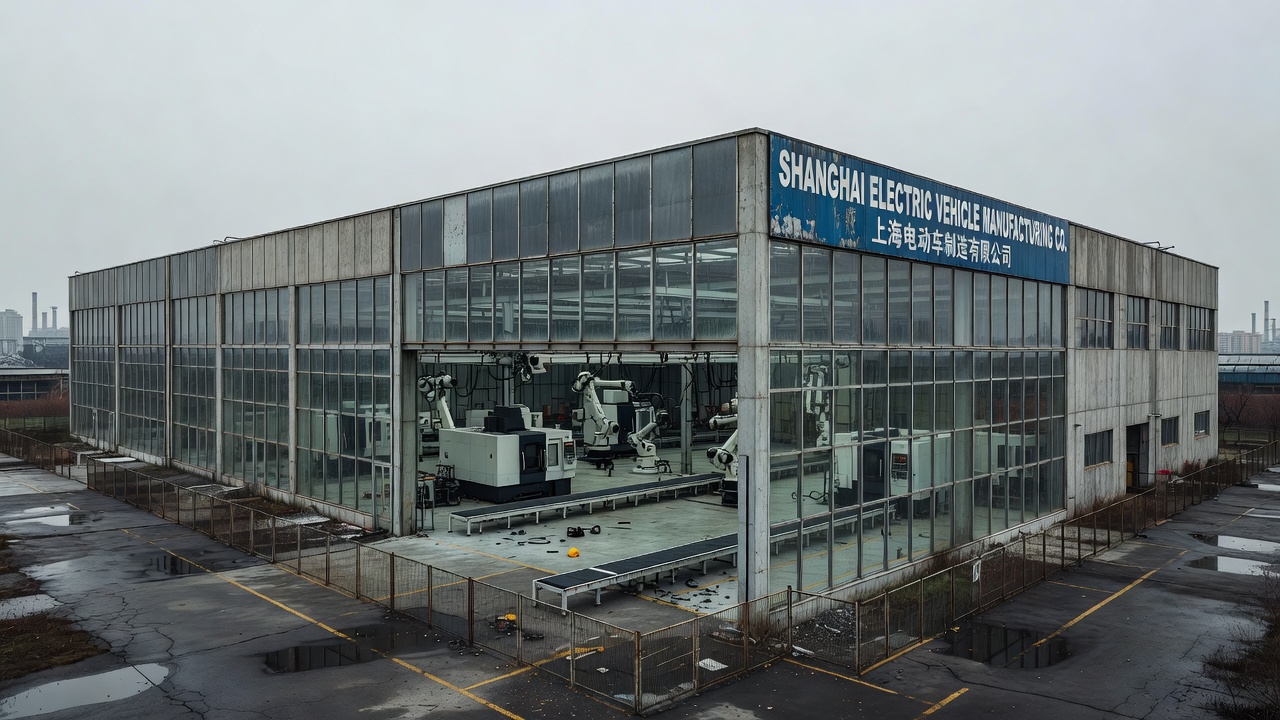
Consider what Tesla loses. China delivered 22 percent of revenue last year. Shanghai builds more vehicles than Fremont and Austin combined. The gigafactory there exports Model 3 and Model Y to Europe, Australia, Southeast Asia, and the Middle East. The supply chain is rooted in Chinese cathode, anode, and electronics clusters that no other region can replicate at speed. Walking away from that is not a divestiture. It is an amputation.
The financial engineering will be brutal. A sale requires a buyer willing to absorb a politically radioactive asset at a discount that reflects the risk of sudden nationalization or export controls. A spinoff leaves Tesla shareholders holding a tracked stock that trades at a perpetual China-risk discount. A closure writes off billions in capex and triggers restitution claims from local governments that subsidized the factory. Every path destroys value. The only justification is that the merged entity — call it X, call it Musk Industries — captures a valuation premium that exceeds the loss. That premium depends entirely on SpaceX's defense revenue stream and Starlink's sovereign contracts. Both require clean citizenship.
Skeptics will ask why the merger needs to happen at all. SpaceX is already the world's most valuable private space company. Tesla is the world's most valuable automaker. Each accesses capital on its own terms. The synergies — shared materials science, shared AI talent, shared lobbying muscle — are real but marginal. The real driver is Musk's personal balance sheet. He pledged Tesla shares to fund the Twitter acquisition. He needs liquidity without selling down his control. A stock-for-stock merger with SpaceX lets him consolidate voting power in a single vehicle while marking the combined entity to a space-plus-energy multiple that Wall Street will price far higher than auto multiples. The China sacrifice is the entry fee.
Beijing will not sit still. The Shanghai factory operates on land granted by the municipal government. Its battery supply agreements involve CATL, a national champion. Its autonomous-driving data flows through servers that Chinese regulators already treat as critical infrastructure. A forced sale to a non-Chinese buyer — or a wind-down — will trigger security reviews, export-license freezes, and possibly an asset freeze. Musk knows this. His 2023 visit to Beijing, where he met Premier Li Qiang and secured FSD pilot approval, now looks like reconnaissance for an exit negotiation, not a commitment to deepen roots.
The timeline matters. The Journal says the separation could happen "fairly quickly." That suggests the legal architecture — separate subsidiaries, ring-fenced IP, segregated data environments — is already in place. Musk does not build options he does not intend to exercise. The Taiwan contingency plan was the blueprint. The SpaceX merger is the catalyst. The only variable is whether the US government blesses the citizenship cure. CFIUS, the Treasury committee that polices foreign investment in defense contractors, will scrutinize every remaining tendril between the merged entity and China. If Tesla's supply chain still runs through CATL, the deal stalls.
Investors should stop modeling Tesla as an auto company with a China growth option. That option is being exercised — by the seller. The new model is a defense-space conglomerate with an auto division that happens to be headquartered in Austin and banned from the world's largest EV market. The valuation math changes. The risk profile changes. The narrative changes. Musk is betting that the market will reward the purity of the defense contractor more than it punishes the loss of the China engine. He has made that bet before. He has won more often than he has lost. But this time the asset on the table is not a rocket prototype or a bitcoin position. It is the factory that made Tesla a global giant. He is choosing SpaceX over Shanghai. The market will price that choice within weeks.