Key Takeaways
- NHTSA just handed Zoox the keys to commercial robotaxi service in Las Vegas
- California politicians are simultaneously building a regulatory wall around Waymo
- The industry now faces a split-screen reality: federal permission slips vs local veto power
- Zoox's custom-built vehicle exemption exposes how arbitrary the current framework remains
The federal government just handed Zoox a permission slip to make money. The National Highway Traffic Safety Administration granted the company a temporary exemption from eight federal motor vehicle safety standards — the final regulatory hurdle before Zoox can charge passengers for rides in its custom-built robotaxi. Paid service starts in Las Vegas. That sentence should terrify every competitor still operating modified production vehicles.
Meanwhile, three hundred miles west, San Francisco's mayor and a California congressman are drafting the industry's obituary. Rep. Kevin Mullin's proposed bill would force federal regulators to write minimum national safety standards for autonomous vehicle operators. Mayor Daniel Lurie stood beside him at the press conference, still seething over July 4 gridlock caused by Waymo robotaxis that froze in traffic, drained their batteries, and blocked emergency routes. Lurie wants state regulators to tighten the screws. Mullin wants Washington to do it. The message is identical: the industry's experimental phase has overstayed its welcome.
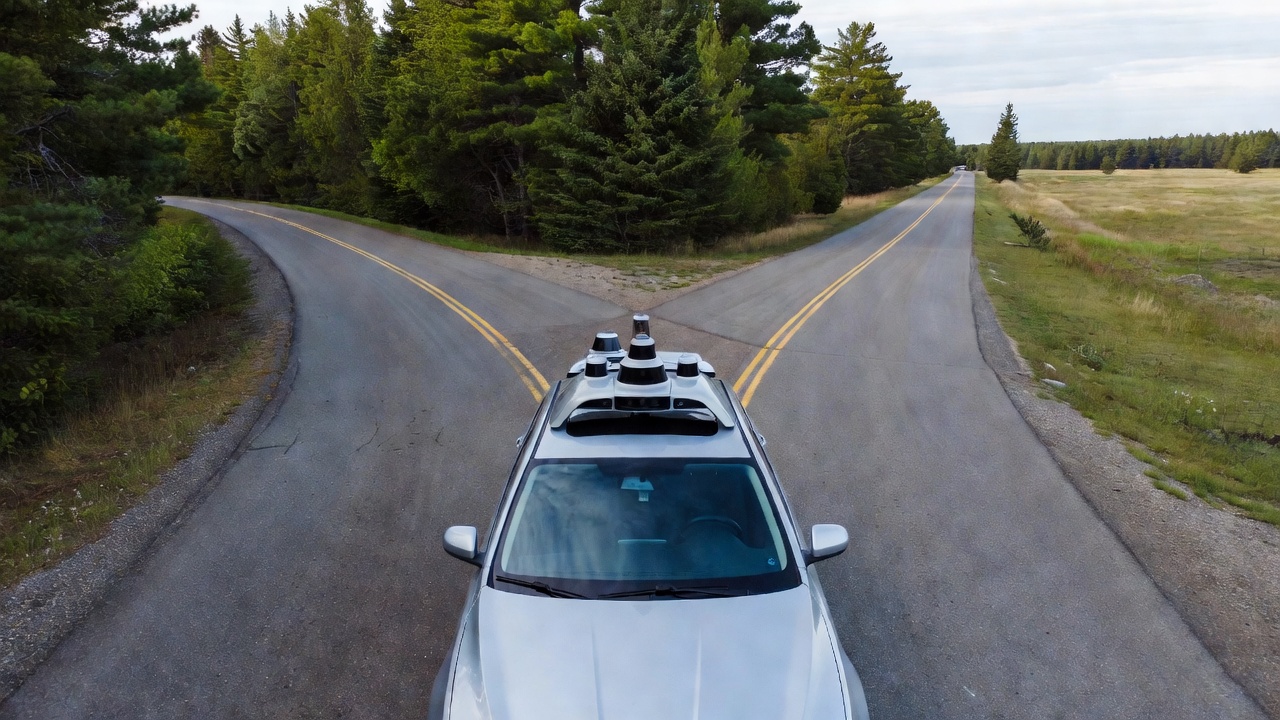
Two roads. One green light. One red wall.
Zoox's exemption is revealing precisely because it is narrow. The company built a vehicle without steering wheels or pedals — a genuine clean-sheet design — and NHTSA said fine, go ahead, but only for this specific configuration, only temporarily, only after Zoox proved it could meet the underlying safety intent through alternative means. That is how regulation should work: evidence-based, vehicle-specific, bounded. But it also means every new entrant needs its own bespoke negotiation. Waymo's Jaguars and Zeekr's Geelys don't qualify. The exemption is a key cut for one lock, not a master key for the industry.
The contrast with California's approach is deliberate. Mullin's bill doesn't ask for vehicle-by-vehicle analysis. It demands blanket standards — minimum national safety floors that would apply to every operator, everywhere. That sounds sensible until you remember that the industry has no consensus on what "safe" looks like for a robotaxi. Disengagements per mile? Emergency vehicle interactions? Phantom braking events? The metrics are still being invented. Writing them into federal law now risks codifying the wrong ones.
San Francisco's frustration is legitimate. Waymo's July 4 failure was not a corner case. Heavy holiday traffic, battery depletion, vehicles stranded in active lanes — this is the operable reality of current-generation autonomy. Emergency responders couldn't reach calls. That is a political problem, not just a technical one. Lurie's constituents don't care about NHTSA exemptions. They care that an ambulance sat behind a frozen Jaguar.
The industry's response has been revealing. Waymo issued statements. Zoox stayed silent. The trade associations recycled talking points about "millions of safe miles." None of them addressed the core complaint: their vehicles become obstacles when they fail. A human driver who stalls can be yelled at, pushed, or arrested. A robotaxi that bricks itself in a travel lane is a stationary hazard with no accountable agent. That asymmetry is what Mullin and Lurie are targeting.
Federal acceleration and state braking create a compliance nightmare. Zoox can launch in Las Vegas under NHTSA's blessing. But if California adopts Mullin's standards — or writes its own — Zoox's Vegas playbook may not port to San Francisco. Waymo operates in both jurisdictions under different rule sets already. The patchwork is hardening into concrete. Companies will soon need distinct vehicle configurations, distinct software stacks, distinct operational protocols for each regulatory regime. That kills the economics of scale.
The Saudi money flowing into Lucid Motors — Prince Al Waleed bin Talal Al Saud taking 5% — suggests capital still believes in the long game. So does the rumored $4 billion round for Musk's Boring Company at $20 billion valuation. Terminal's $20 million Series A for fleet telematics shows the unsexy infrastructure layer still attracts. But capital patience is not infinite. Investors fund regulatory certainty. They flee regulatory chaos.
NHTSA's move on Zoox looks like an attempt to manufacture certainty. One exemption, one company, one city. A controlled release valve. But the valve only works if states respect it. California's legislation signals they won't. The constitution gives states broad police power over streets. Federal motor vehicle standards preempt design — but not operation. That gap is where the fight lives.
Zoox should launch in Las Vegas. It earned the right. But the company and its peers should stop pretending a federal green light means anything in Sacramento. The robotaxi industry just got its first commercial license — and its first eviction notice — in the same week. The split screen is the story. Everything else is noise.