Key Takeaways
- A water heater that learns your shower schedule and heats when grid power is cheapest just raised $8 million to prove "sustainable" can mean "simply better"
- The grid doesn't care about your comfort — but Reservoir's fleet of smart tanks could deliver a megawatt of flexible demand without building a single battery
- Most heaters get replaced in panic when they leak; Reservoir bets predictive maintenance and leak detection will make plumbers push its product first
- The real product isn't hot water — it's a distributed energy asset that pays for itself through utility demand-response checks
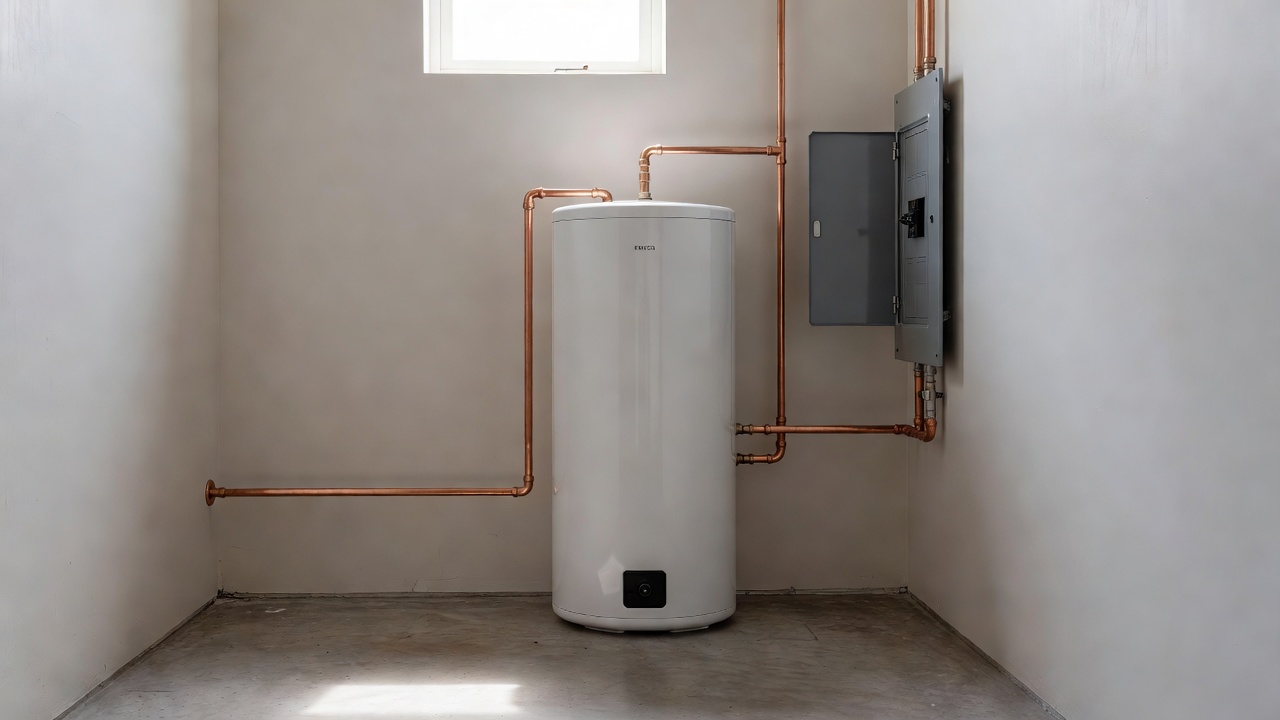
Your water heater is the dumbest major appliance in your house. It keeps 50 gallons scalding hot 24 hours a day, ignores the price of electricity, and waits silently until it floods your basement. Luke Winston-Almanzar looked at his own unit and did the math: heating water consumed more energy than driving his electric car. His air fryer had more computing power.
That frustration spawned Reservoir. The Boston startup just closed an $8 million seed round led by Asymmetric Capital Partners, with Founder Collective and MCJ participating. The capital funds a simple bet — that a heat-pump water heater with genuine intelligence can win on merit, not virtue.
The efficiency claim is real. Reservoir's unit runs nearly four times more efficiently than a standard electric resistance heater and five times better than gas. But efficiency alone doesn't close sales. Contractors swap failed tanks for whatever sits on their truck. Homeowners choose in crisis. So Reservoir built features that make the installer's job easier and the homeowner's life safer: leak detection that shuts off water before damage spreads, predictive maintenance alerts, a mobile app that actually works.
The learning month is the clever part. For 30 days the unit watches — when showers run, how much hot water the dishwasher draws, whether the household wakes at 6 a.m. or noon. Then it shifts heating to off-peak hours when wholesale electricity prices dip or renewable generation spikes. The tank becomes thermal storage. The homeowner gets the same hot shower. The grid gets a controllable load.
One hundred units are already running in Greater Boston. The target is 1,000 by end of next year. That threshold matters: a thousand tanks aggregate to roughly a megawatt of shiftable demand. Utilities pay handsomely for that flexibility through demand-response programs. Winston-Almanzar intends to channel those payments back into lower hardware prices, creating a flywheel where grid value subsidizes adoption.
Skeptics will note the heat-pump water heater category already exists. Rheem, AO Smith, and Stiebel Eltron sell them. But incumbents treat connectivity as a spec-sheet checkbox — Wi-Fi modules bolted onto legacy controllers. Reservoir wrote its own firmware, controls its own compressor logic, and owns the full data loop. That vertical integration lets the unit pre-heat aggressively before a predicted demand spike without risking a cold shower.
The leak story might be the strongest sales pitch. Water damage claims average $11,000. Insurance adjusters know the culprit: a 12-year-old tank that finally gave up. Reservoir's pressure and flow sensors catch the weep before the gush. Plumbers who install it once stop getting 2 a.m. emergency calls. They become the sales channel.
Winston-Almanzar came from Formlabs, where he learned that hardware startups die when they outsource the hard problems. He kept thermal modeling, controls, and manufacturing in-house. The seed round buys tooling for the next production revision and funds the Boston density play — clustering installs to prove neighborhood-level grid services work before expanding.
Policy tailwinds help. Massachusetts' Clean Heat Standard and federal IRA rebates stack to cover much of the installed cost. But policy shifts. Product stickiness doesn't. If Reservoir's app tells you "your anode needs replacement in 60 days" and your plumber confirms it, you trust the brand. Trust compounds.
The grid needs storage. Lithium gets headlines. Thermal storage in millions of basement tanks gets ignored. Reservoir's insight: the tank is already there. It just needs a brain. Eight million dollars buys a lot of brains. The test now is whether the product keeps its promises when the first thousand units hit a New England winter.