Key Takeaways
- Malaysia pulled the plug on Balaji Srinivasan's Network School over licensing failures, not ideology
- The would-be nation-builder renounced US citizenship, declared himself Singaporean, and preemptively attacked the Wall Street Journal as a hit piece
- Attendees paid premium prices for moldy rooms, gender imbalance, and a manifesto disguised as a retreat
- Kazakhstan just signed up for round two
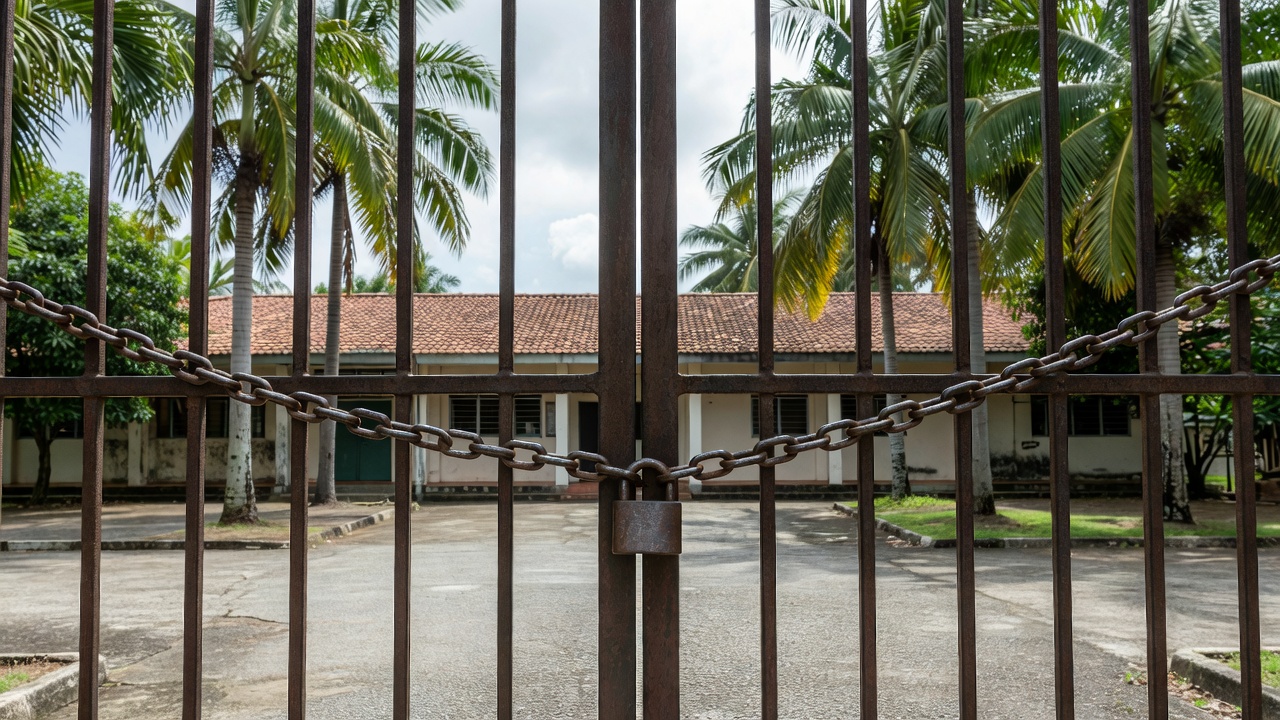
Malaysia didn't shutter the Network School because it threatened the sovereign order. It shuttered the operation because the paperwork wasn't in order. That distinction matters. The Malayasian government doesn't fear Srinivasan's seven-stage blueprint for a successor state. It fears unlicensed hospitality ventures occupying abandoned hotels. The distinction also reveals the gap between Srinivasan's rhetoric and his reality.
The Network School billed itself as "a frontier community for techno-optimists." The Wall Street Journal found something closer to a hostel with a reading list. Attendees reported mold spreading across walls. Women were scarce. Nightlife was nonexistent. The program cost thousands per month. For that price, you could rent a condo in Kuala Lumpur, join a coworking space, and still afford therapy for the disappointment.
Srinivasan's response to WSJ inquiries tells you everything about the man. He didn't address the mold. He didn't explain the gender ratio. He published a sprawling X thread declaring himself "a proud Singaporean," renouncing his American citizenship retroactively to 2023, and framing the forthcoming story as a hit piece designed to make him look like "an odd duck […] as opposed to an early adopter." The phrasing is deliberate. Early adopters buy the first iPhone. Odd ducks convince strangers to live in damp rooms while they draft constitutions.
The Network State, Srinivasan's book, outlines seven stages from community to country. Stage one: network school. Stage two: network town. Stage three: network city. The progression assumes each stage funds and legitimizes the next. Malaysia was supposed to prove stage one viable. Instead it proved stage one can't clear local regulations. The model collapses if the host nation treats you like a hotel operator rather than a founding father.
Singapore hasn't claimed him. The city-state maintains strict criteria for citizenship. Srinivasan's announcement reads like a man securing an exit before the door closes. His American renunciation, if legally complete, leaves him stateless until Singapore processes whatever application exists. That limbo suits a narrative about transcending the nation-state. It suits a tax strategy less convincingly.
Kazakhstan's agreement for a new campus arrives on cue. The Kazakh government has courted tech nomads and special economic zones for years. Astana's willingness to host stage one again suggests either they didn't read the WSJ piece or they calculated the publicity outweighs the mold risk. Srinivasan gets a fresh jurisdiction. Kazakhstan gets a headline about innovation. The attendees get new rooms. Whether those rooms pass inspection remains the only question that matters.
Techno-optimism attracts capital because it promises exit velocity. The network state pitch sells sovereignty as a service. But sovereignty requires territory, and territory requires compliance. Srinivasan's Malaysian experiment failed on compliance. His Kazakh reboot will face the same test. No manifesto survives contact with a building inspector.
The deeper pattern is familiar. Charter cities, seasteading, crypto jurisdictions — each generation of exit-seekers discovers that existing states enforce rules for reasons beyond malice. Fire codes protect lives. Zoning prevents externalities. Licensing ensures accountability. The Network School's mold isn't a metaphor. It's a code violation. Srinivasan's seven stages never accounted for the boring truth: you don't build a new country by skipping the paperwork of the old one.