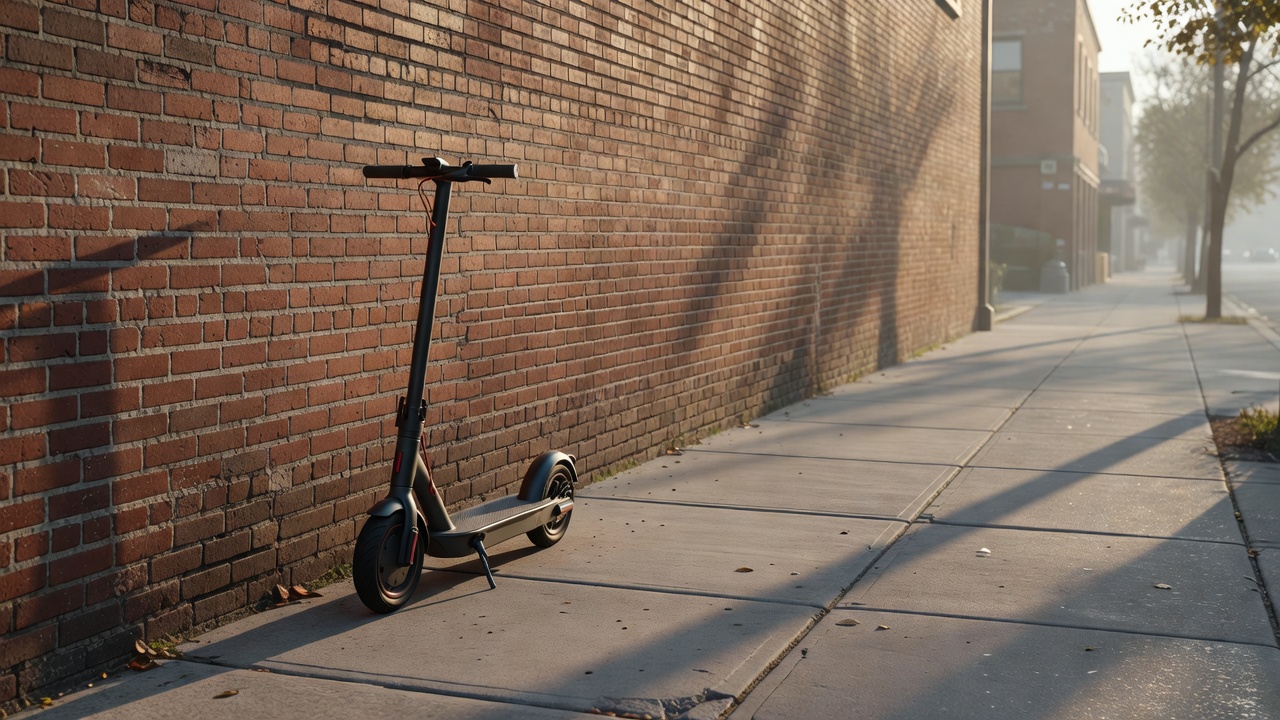
Lime begins life as a public company after years of uncertainty
Nine years. Three near-death experiences. One pandemic. A graveyard of competitors. And now, finally, a ticker symbol.
Lime's IPO this week — $167 million raised, a $1.66 billion valuation, a 9% first-day pop — is being framed as a victory lap. CEO Wayne Ting's "heart, sweat, and tears" quote is already being pasted into pitch decks across Sand Hill Road. But let's not mistake survival for triumph. This isn't a victory lap; it's a chapter 11 filing that worked.
The valuation lie
That $1.66 billion figure? It's a ghost. Bird's SPAC merger valued it at $2.3 billion in 2021. Today, Bird exists only as a restructuring case study. Lime's own 2021 funding round priced it at $5.1 billion. The company has lost two-thirds of its peak private valuation while growing revenue 70% year-over-year. That's not a success story — that's a sector that convinced itself unit economics would magically improve with scale. They didn't.
The micromobility thesis was always seductive: dense cities, climate mandates, last-mile gaps, app-based convenience. The reality was vandalism, regulatory warfare, hardware that died in six months, and a customer base that treated $1 unlocks as a birthright. Lime survived not because it cracked the code, but because it had Uber's balance sheet as a backstop and the patience to outlast competitors who burned cash faster.
The going-concern confession
Buried in the S-1 was the most honest sentence in any IPO filing this year: "substantial doubt" about Lime's ability to continue as a going concern. The company needed this offering to resolve $1 billion in liabilities, half due by year-end. Without the IPO, Ting admitted they'd need "other sources of financing" — code for a fire sale or Chapter 11.
This wasn't a strategic timing decision. It was a maturity wall. Lime went public because its creditors ran out of patience.
Profitable? Define your terms
Ting touts three years of free-cash-flow positivity. The numbers: $521 million revenue (2023), $686.6 million (2024), $886.7 million (2025). Losses narrowing from $122.3 million to $33.9 million. That's progress. But "free cash flow positive" in micromobility often means depreciating scooters slower than they break, or capitalizing maintenance that should be expensed. The fleet turns over every 18-24 months. Every ride subsidizes the next hardware purchase. This isn't SaaS; it's a logistics business with disposable assets.
And the growth ceiling is real. Lime operates in 280+ cities. The next 280 are smaller, less dense, more car-dependent. International expansion means navigating Paris-style bans, London-style caps, and the universal truth that cities hate sidewalk clutter more than they love emissions targets.
The Uber shadow
Uber owns roughly 15% post-IPO. That's not a passive investment — it's a strategic option. Uber's own mobility take rate hovers around 25%. Lime's hardware-heavy model will never touch those margins. At some point, Uber either buys the rest or lets it wither. Ting knows this. His "lot of growth ahead" line reads like a founder negotiating his earnout.
What this means for the category
Lime is now the last standing pure-play micromobility public company. Tier and Dott merged. Superpedestrian shut down. Micromobility.com delisted. Bird bankrupt. The sector has consolidated not into profitability, but into a single survivor with a clean cap table and a runway measured in quarters, not years.
The IPO gives Lime currency for acquisitions — expect them to hoover up distressed assets in Europe and Latin America. It gives them a degree of transparency that private markets never demanded. And it gives retail investors a chance to bet on a business model that has never, anywhere, produced sustained GAAP profitability at scale.
The real test starts now
Public markets don't tolerate "substantial doubt." They tolerate growth stories with visible paths to margin expansion. Lime has neither. What it has is a brand that became a verb, a fleet that mostly works, and a CEO who refused to quit. That's worth something. Whether it's worth $1.66 billion is a question the market will answer every trading day for the next decade.
Ting got his liquidity. His early investors got their exit. The employees who stuck around through the 2020 layoffs and the 2022 valuation reset got paper wealth. But the business? The business still has to prove that electric scooters can make money without a pandemic tailwind, without zero-interest-rate capital, and without the forgiveness of private shareholders who measured success in funding rounds rather than earnings.
Welcome to the big leagues, Lime. The scoreboard resets today.