Key Takeaways
- Runware's Sonic Inference Pods deploy in days, not the years hyperscalers need for fixed data centers
- Ten pods already live across three continents; 160 sites queued for rapid expansion
- Distributed inference wins on latency and resilience — one pod fails, traffic reroutes instantly
- Hyperscalers betting billions on centralized campuses may be solving yesterday's problem
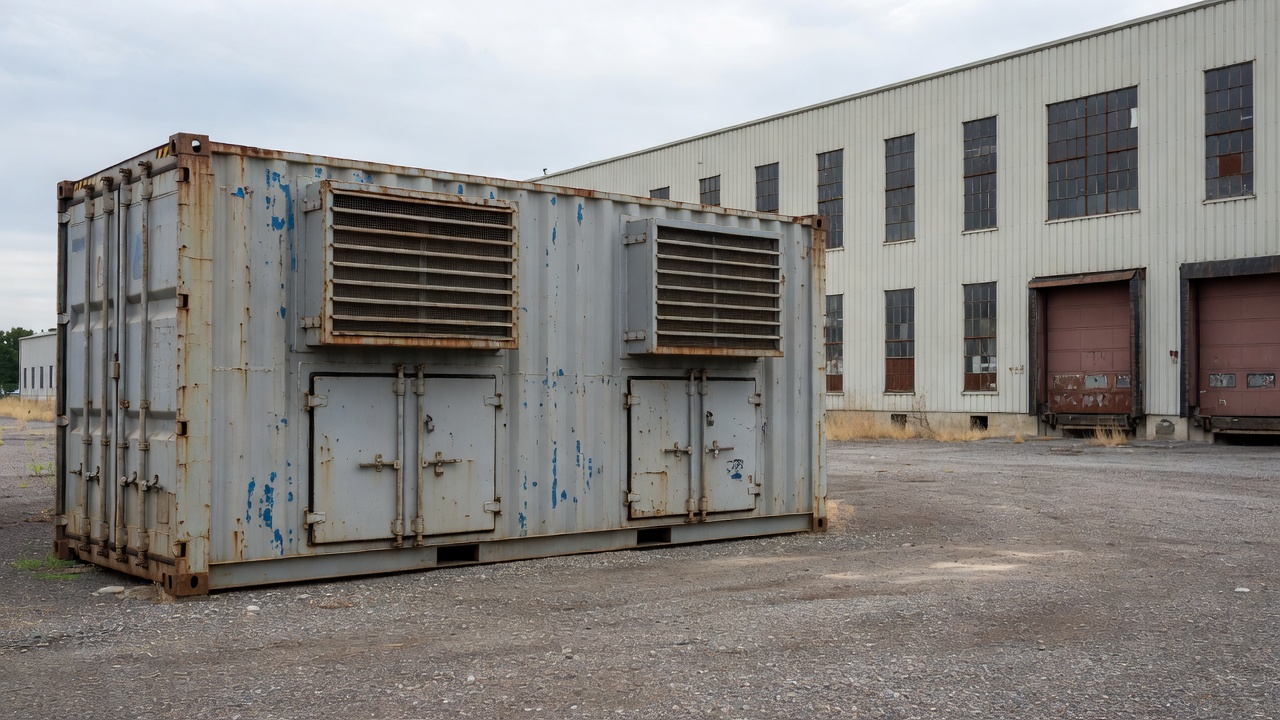
The hyperscalers are building cathedrals. Runware is shipping shipping containers.
That contrast defines the current infrastructure arms race. OpenAI inches toward a half-trillion-dollar Ohio campus. SpaceX scouts sites for its own monoliths. These are bets on permanence — massive, water-guzzling, permit-laden facilities that take years to commission. Runware's Sonic Inference Pod arrives on a flatbed, plugs into local power, and serves inference within days. The company has ten running already across the U.S., Europe, and Asia-Pacific. Another 160 sites sit ready.
The math is unforgiving. Inference demand compounds faster than concrete cures. Radulescu puts it plainly: facilities cannot be built fast enough. His pods use closed-loop cooling, zero water, and a hardware iteration cycle measured in weeks rather than quarters. When Nvidia drops a new GPU, a pod swaps it. A fixed data center rewrites its build spec, re-permits, re-cools, re-powers. That lag is a structural disadvantage no capital reserve can erase.
Latency is the quiet killer. Centralized hyperscale forces every request to traverse backbone networks to a handful of blessed zip codes. Runware's pods sit where users live. Requests route to the nearest capacity. One pod goes dark — power fault, fiber cut, hardware brick — and traffic shifts to the next closest unit. The blast radius of failure shrinks from campus to container. Customers who want dedicated hardware simply take a whole pod. No virtualization tax, no noisy neighbors.
Skeptics will cite the hyperscalers' war chests. Five hundred billion dollars buys a lot of concrete and political cover. But capital solves the wrong constraint. The bottleneck is not money. It is talent that understands exascale circuit design, thermal physics at density, and the firmware stack that makes it sing. Radulescu notes a single board respin costs months. The pool of engineers who can execute that loop without melting silicon is vanishingly small. Hyperscalers are fishing in the same pond. Runware has already built the rod.
The business model sharpens the edge. Runware sells inference, not pods. The hardware is a means, not the product. That alignment matters. Hyperscalers amortize real estate; they need utilization rates that justify the mortgage. Runware adds capacity only when demand pulls it. No stranded assets. No praying for a training run to fill the racks.
Water is the sleeper constraint. Arizona. Nevada. Texas. The same sun belts that offer cheap power and land also offer aquifer stress. Closed-loop cooling is not a sustainability talking point. It is a permitting accelerator. No water rights negotiations. No environmental impact statements on discharge. The pod parks. The chiller loops. The inference flows.
Wix and Higgsfield AI already run production workloads on the network. That is not a pilot. That is revenue. The $50 million Series A closed in December. The next round will price the network effect: every new pod improves the latency map for every existing customer. Metcalfe's law applied to compute geography.
The hyperscalers will build their cathedrals. Some will fill. Some will become very expensive modern art installations. But the inference layer — the daily, relentless, latency-sensitive grind of serving models to users — that layer is going distributed. The pods have already left the loading dock.