Key Takeaways
- River's $120M Series C proves Indian EV investors still back manufacturing depth over model breadth
- A single moped model hitting 6,000 monthly sales exposes how underserved the utility segment remains
- Yamaha and Mitsui on the cap table hints at supply-chain integration, not just financial engineering
- The 2028 profitability target demands flawless execution on a second factory that hasn't broken ground
River just proved that discipline beats breadth in India's electric two-wheeler bloodbath. The Bengaluru startup raised $120 million in Series C funding without diluting founders or loading up on venture debt — less than 12% of the round. That's rare. Most hardware founders at this stage are'$semodelling secondary sales to give early angels an exit. Aravind Mani said no. The cap table tells the real story: Elev8 and Claypond led, but Yamaha Motor, Mitsui, and Al-Futtaim stayed in. Strategic money doesn't re-up for financial engineering. It re-ups when the production line starts looking like a supply-chain asset.
The Indie moped is not a showroom queen. At ₹155,000 ($1,630) with 99 miles of claimed range, it targets self-employed workers aged 28 to 35 — delivery riders, tradespeople, small-business owners who calculate cost per kilometer like a second language. River sells 6,000 of them monthly through 75 stores. That's 50,000 units total from a single SKU launched in 2023. Meanwhile, better-funded rivals sprawl across scooters, motorcycles, and cargo variants, burning cash on marketing wars for the same urban commuter. River's focus looks like arrogance until you see the revenue curve: 330% year-over-year growth, ₹1 billion monthly run rate. The math works because the customer doesn't want choice. They want a tool that earns its keep.
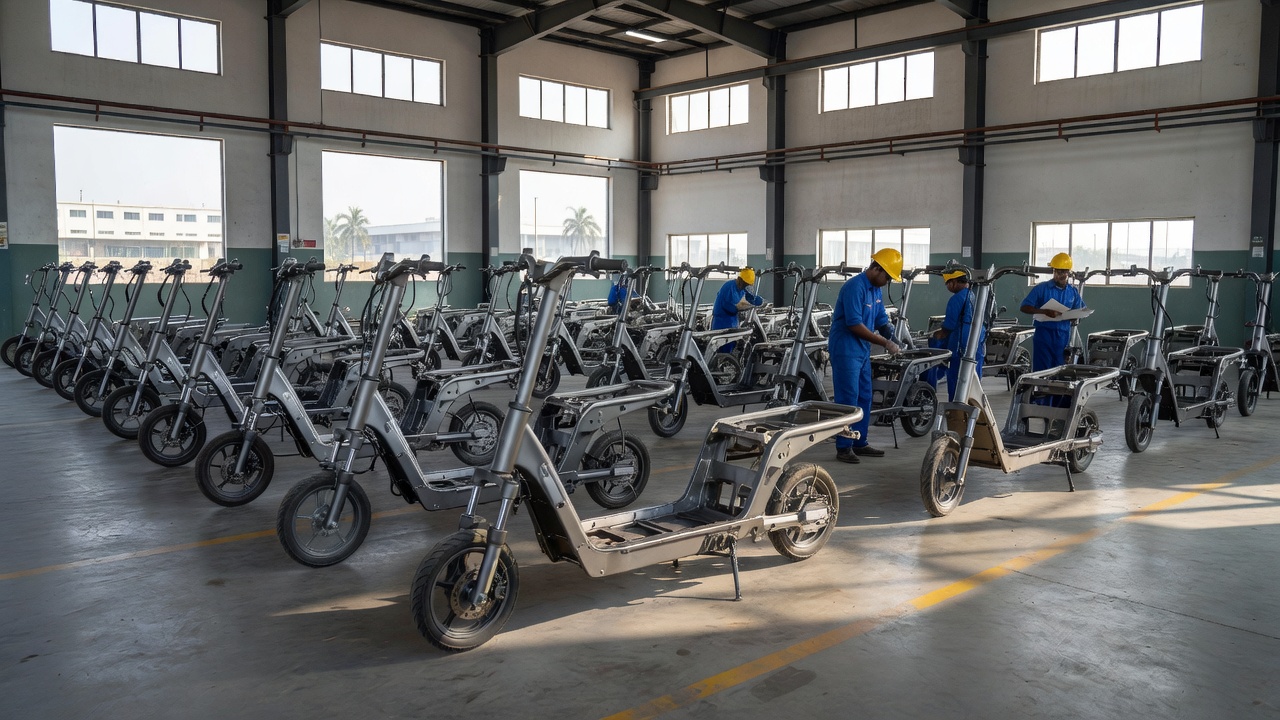
Manufacturing is where this story gets sharp. Mani admitted the steepest learning curve was scaling from 20 vehicles a day to 300. That's not a software sprint. That's jigs, fixtures, supplier qualification, quality gates — the unglamorous grind that kills hardware startups. The first factory on Bengaluru's outskirts now hits 10,000 monthly capacity after upgrades. It will saturate by early next year. River needs 20,000 to 25,000 units monthly to hit operational profitability by 2028-29. Gross margins are "approaching double digits" — code for single digits today. Every percentage point requires volume that the current roof cannot hold.
So the new factory becomes the existential bet. Construction starts in two months, location unfinalized. Phase one timing undisclosed. Hardware veterans know this gap: between board approval and first welded frame lives a year of permits, power contracts, equipment lead times, and hiring cycles. River's 2028 profitability window assumes zero slippage. That's not a plan. That's a prayer.
The two new models planned for next year compound the risk. Mani was candid: "I don't have capacity to do one more model today." Introducing fresh SKUs while commissioning a greenfield plant is how you get quality escapes, supply-chain snarls, and brand dilution simultaneously. Yamaha and Mitsui know this. Their continued presence suggests they're either comfortable with the execution risk or positioned to absorb the fallback — component contracts, technology licensing, or a tuck-in acquisition if the wheels wobble.
India's two-wheeler EV market is loud. Ather Energy, Ola Electric, Bajaj, TVS — all fighting for the same Instagrammed commuter. River chose the quiet buyer who pays cash, runs the vehicle into the ground, and replaces it when the economics demand it. That customer doesn't tweet. They scale. The $144 million total capital raised buys River time to prove that a utility-first, single-model, manufacturing-obsessed play can outlast the noise. But time expires when concrete pours. The next 18 months will decide whether River becomes a case study in focused execution or another hardware ghost with a half-built factory.