The Demo Is a Lie
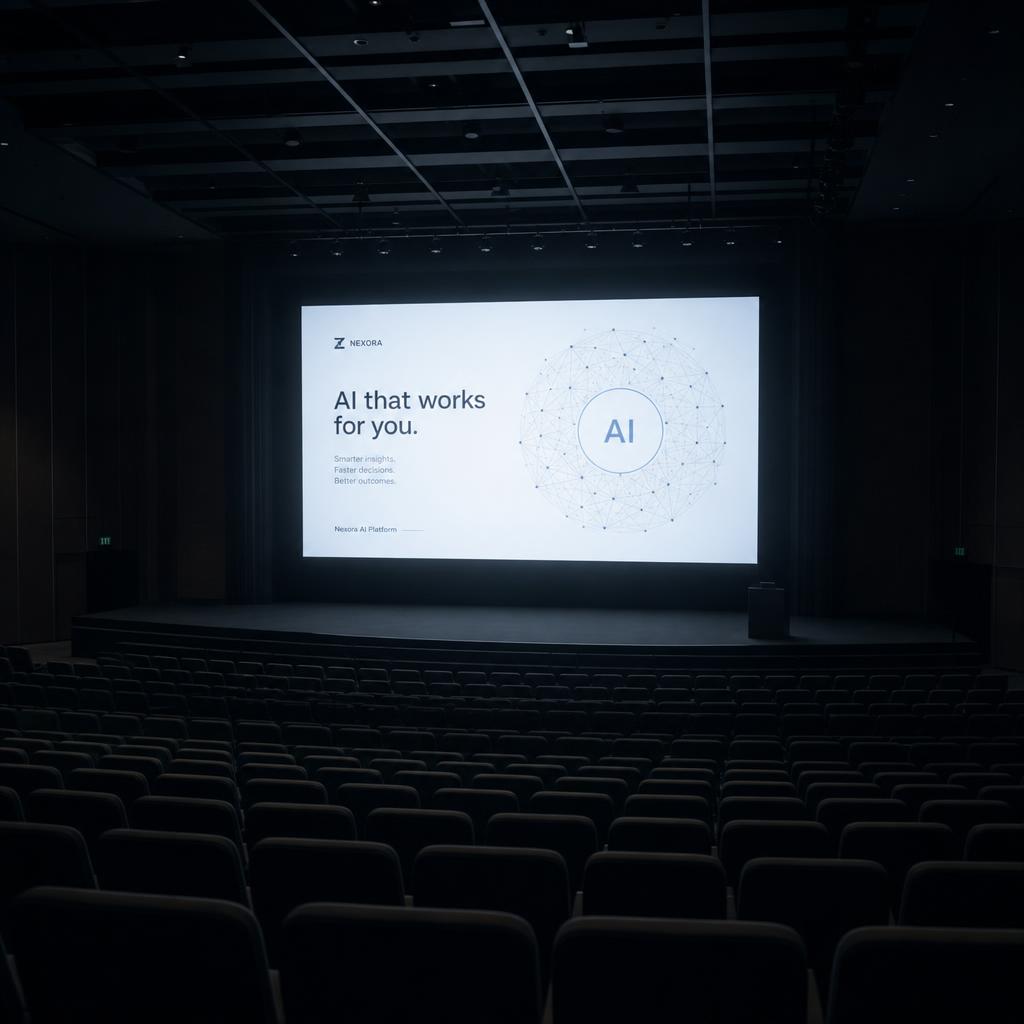
You have seen the demo. The CEO leans into the microphone, the lights dim, and a cursor blinks on a massive screen. “Write a quarterly report in the voice of Hemingway,” the prompt reads. Two seconds later, prose flows—crisp, muscular, terrifyingly competent. The room erupts. Contracts are signed on iPads before the applause dies down. Six months later, the same tool sits unused on a virtual desktop, a $2 million screensaver for the procurement team.
This is the lifecycle of enterprise AI. The gap between the keynote stage and the production environment is not a valley; it is a canyon. Vendors sell magic wands; IT departments receive rusty pipes. The reason every demo looks amazing and every rollout fails is structural: the demo is a controlled experiment, and the enterprise is a chaotic system. Until buyers stop evaluating the trick and start auditing the plumbing, the failure rate will remain a feature, not a bug.
Why the Demo Works
The demo works because it is a Potemkin village built on sterilized data and a script so narrow it could thread a needle. The model powering that Hemingway report has never seen your company’s data. It has never choked on a PDF scanned at 150 DPI with a coffee stain on page four. It has never hallucinated a compliance clause that triggers a regulatory audit.
In the demo, the scope is a pinhole. The vendor defines the inputs, curates the examples, and cherry-picks the outputs. The prompt engineering is done by a specialist who speaks the model’s latent language fluently. The infrastructure is a clean GPU cluster in a lab, not a hybrid cloud environment fighting for bandwidth with the ERP system. The demo proves the model *can* reason. It says nothing about whether the model *will* reason when fed the exhaust of a thirty-year-old SAP migration. The demo is a unit test. The enterprise is integration hell.
The Five Horsemen of Rollout Failure
1. Dirty Data Is the Rule, Not the Exception
Vendors train on Wikipedia and Common Crawl. You run on invoices from 2004 stored in a Lotus Notes database nobody has the password for. The dirty secret of generative AI is that retrieval-augmented generation (RAG) is only as good as the retrieval, and enterprise retrieval is a disaster. Chunking strategies choke on tables. Embeddings miss context buried in footnotes. Permissions are ignored, leaking the CEO’s compensation package to the intern chatbot. Cleaning this data is not a preprocessing step; it is a multi-year digital transformation program masquerading as an AI project. Most organizations run out of budget—and political will—before the first vector index is built.
2. Change Management Is a Euphemism for Culture War
Leadership treats AI rollout as a software installation. It is an organizational restructuring. You are not deploying code; you are asking a senior analyst to trust a stochastic parrot over their own decade of intuition. You are telling a support team that the bot handles tier-one tickets, knowing the bot will hallucinate a refund policy and the human gets the blame. The resistance is not luddism; it is rational self-preservation. Without a redesign of incentives, metrics, and career paths, the tool becomes shadow IT—used quietly by the curious, ignored by the pragmatic, and actively sabotaged by the threatened.
3. Integration Hell Is Where Pilots Go to Die
The demo runs in a browser. The enterprise runs on APIs that require VPN tokens, rate limits, and approval from a security review board that meets quarterly. The model needs to write back to Salesforce, read from Snowflake, and trigger a workflow in ServiceNow. Each handshake is a custom engineering project. Each vendor update breaks the fragile wrapper. The “easy” integration takes six months. The “hard” one never finishes. By the time the architecture review board signs off, the model version in the demo has been deprecated twice, and the prompt templates are obsolete.
4. Scope Creep Is the Default Setting
The pilot starts with “summarize meeting transcripts.” By month three, the steering committee wants “predict churn,” “draft legal contracts,” and “optimize the supply chain.” The platform team builds a fragile orchestration layer trying to be everything to everyone. Latency spikes. Costs explode. Governance collapses. The project that solved one problem poorly now solves twelve problems not at all. The demo succeeded because it did one thing. The rollout fails because it tries to do the business’s entire wish list in a single fiscal year.
5. No Champion, No Budget, No Future
Every successful enterprise software deployment has an executive sponsor who loses sleep over it. AI projects often land in an innovation lab or a center of excellence—organizational purgatory where budgets are soft and accountability is diffuse. When the first hallucination hits the front page of the internal Slack, the sponsor distances themselves. The vendor blames the prompt. The data team blames the vendor. The business unit blames IT. Without a single throat to choke—and a single champion to shield the team—political gravity crushes the initiative. The licenses auto-renew. The usage metrics flatline. The CFO asks hard questions at renewal time.
What the Ten Percent Do Differently
The small fraction of rollouts that survive share zero resemblance to the keynote narrative. They do not chase AGI. They automate a single, high-volume, low-risk workflow with measurable ROI. They treat the model as a commodity component—swappable, versioned, monitored—and invest ninety percent of their engineering effort in the scaffolding: evaluation harnesses, guardrails, observability, and human-in-the-loop interfaces.
They accept that the model will fail. They build for failure. They design the handoff between silicon and carbon before they write the first prompt. They staff the project with domain experts who have veto power over outputs, not just prompt engineers who optimize for benchmarks. They measure success in hours saved or errors caught, not in tokens generated or “engagement” metrics.
Most importantly, they kill the pilot. They refuse the temptation to expand scope until the first use case is boring, stable, and profitable. They treat AI not as a strategic initiative but as a maintenance burden that happens to pay for itself. The demo is a magic show. The rollout is plumbing. The ten percent who succeed are the ones who brought a wrench.