Key Takeaways
- Roku's Fairground channel feeds viewers an undifferentiated stream of AI-generated video slop
- The content lacks visual coherence, narrative purpose, or any curatorial logic beyond "AI made this"
- FAST's promise of effortless discovery collapses when the discovery is algorithmic garbage
- Roku gets marketing cover for the gen-AI hype cycle; viewers get trough feed
Roku didn't add a channel. It added a feedlot. Fairground AI Creator TV runs twenty-four hours a day on the platform's free tier, serving clips stitched together by text-to-video models that still hallucinate anatomy and physics in equal measure. The startup launched this year. Its founders promise adaptations of Robin Hood and Dracula. What they delivered instead is a parade of formless shorts — anime-derivative fragments, uncanny valley CGI, a horror sketch where actors defeat a demon by mocking it, a Greek myth tidbit that gestures at The Odyssey without reaching it. Nothing connects. Nothing accumulates. You don't watch this channel. You graze it.
The FAST model always asked viewers to surrender choice. Lean back, surf the guide, let nostalgia or curiosity do the work. That bargain held when the library held classics — Mad TV, Whose Line, the Black sitcom block Roku dropped the same week. Those shows were made by people who understood pacing, lighting, performance. They earned their runtime. Fairground's slop demands the same passivity but offers no craft in return. The audio mixes betray human post-production hands trying to salvage machine refuse. The visual seams scream synthetic origin. Every ad break — and FAST runs on ads — cuts to a real movie trailer and the quality chasm yawns. Roku is literally sandwiching its premium inventory between algorithmic chum.
Fairground's website emphasizes creator partnerships. That phrasing does heavy lifting. The "creators" prompt models. They curate outputs. They stitch clips. They do not draw, light, direct, or act. Calling that creation is like calling a vending machine a chef. The startup wants credit for volume. Roku wants credit for novelty. The press release writes itself: "Roku leans into generative AI." The viewer gets nothing but time burned.
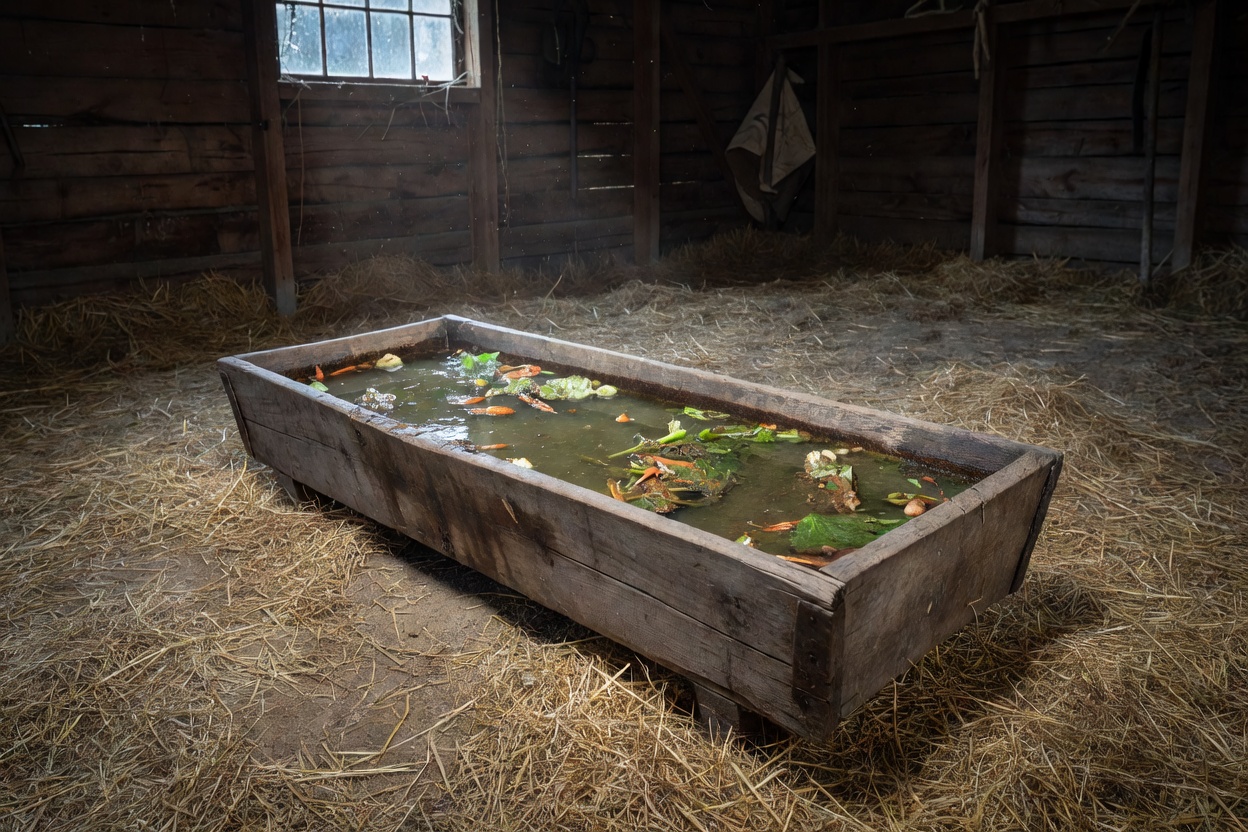
This is the trough metaphor made literal. Industrial agriculture feeds cattle nutrient-optimized slurry because it scales. Fairground feeds viewers narrative slurry because generating coherent video at scale remains unsolved. The industry knows this. The demos at conferences cherry-pick the three seconds that hold together. Fairground's channel is the unedited reel — hours of the stuff that didn't make the sizzle reel. Roku chose to air it anyway. That decision reveals contempt for the FAST audience. The lean-back viewer is not a partner. They are inventory.
Critics will call this early days. Models improve. Sora, Veo, Gen-3 — the names cycle. But the channel exists now. It occupies slot space on a major platform. It monetizes via the same ad load as Whose Line. Roku validated the product before the product reached minimum viable quality. That is not experimentation. That is a land grab. The platform wants "AI content" as a category line item for advertisers and investors. Fairground supplies the SKU. The viewer swallows the filler.
Free ad-supported streaming television earned its foothold by lowering the friction of rediscovery. You stumbled into a M*A*S*H rerun. You remembered why you liked it. That stumble required a catalog built by intention. Fairground replaces intention with generation. The catalog becomes infinite and weightless. Discovery dies when every path leads to the same gray slurry. The trough has no bottom.