Key Takeaways
- The FCC just approved a mirror satellite that will shine four times brighter than the full Moon across a 5-kilometer beam
- Reflect Orbital plans 50,000 such satellites — a constellation that would turn night into day for profit
- Astronomers warn of permanent retinal damage for anyone viewing the beam through optics
- Light pollution from the fleet would cripple ground-based astronomy and disrupt ecosystems worldwide
The Federal Communications Commission has quietly authorized a satellite that will paint a patch of Earth with sunlight four times brighter than the full Moon. Eärendil-1, an 18-square-meter mirror built by California startup Reflect Orbital, will focus a 5-kilometer beam of reflected solar radiation onto whatever target the company chooses. The FCC treated this as a routine communications license. It is not routine. It is a precedent that hands a private firm the power to override natural darkness.
Reflect Orbital does not hide its ambition. The test satellite is a prototype for a fleet of up to 50,000 mirrors. The business model sells daylight on demand — solar farms that never sleep, construction sites that never pause, city streets that never dim. The pitch sounds benevolent: clean energy, safer nights, search-and-rescue support. But the physics betrays the promise. A single mirror at operational brightness will blaze at magnitude -8 within its beam. That is Venus on steroids. Through a backyard telescope, that intensity burns retinas in seconds. The American Astronomical Society and the Royal Astronomical Society have both issued warnings. They use words like "disastrous" and "permanent eye damage." The FCC heard them and launched anyway.
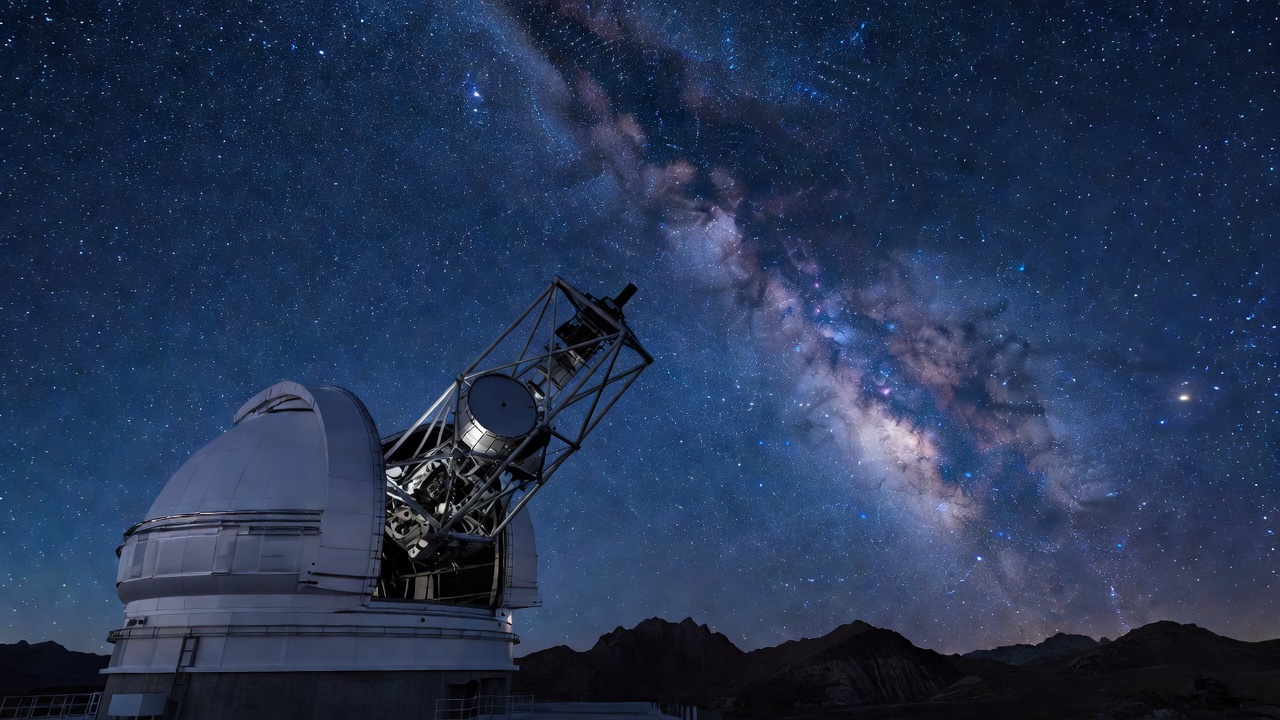
Astronomy dies first. Ground-based observatories already fight a losing battle against Starlink and its imitators. Those satellites streak across exposures. Space mirrors do not streak. They park. A 50,000-strong constellation would plant artificial stars across every coordinate, each one orders of magnitude brighter than the worst megaconstellation offenders. Adaptive optics cannot subtract a spotlight. Time-domain filtering cannot erase a beam that lingers for hours. The Vera Rubin Observatory, built to scan the entire visible sky every few nights, would find its deepest images punctured by unremovable glare. The science of the faint — near-Earth asteroids, dark energy probes, the first light of cosmic dawn — becomes impossible from the ground.
The damage spreads beyond telescope domes. Human circadian rhythms evolved under a cycle of light and dark that artificial noon at midnight shatters. Epidemiological studies link chronic light pollution to metabolic disorders, hormone disruption, and cancer risk. Migratory birds navigate by starlight; a sky spiked with mirror-glare rewrites their maps. Insects spiral into beams and die. No environmental impact statement accompanied the FCC license. The agency classified the mirror as a communications device — a category crafted for radio transmitters, not orbital floodlights.
Regulatory capture wears a new disguise. The FCC claims spectrum authority. But spectrum governs radio waves, not photons. The Commission has no mandate to regulate visible light, no expertise in ocular safety, no framework for ecological consequence. It approved Eärendil-1 because Reflect Orbital filed paperwork under the right docket. The Outer Space Treaty requires authorization and continuing supervision of non-governmental space activities. The FCC just called a spotlight a radio. That sleight of hand opens the door for any company to orbit any luminous object under a communications flag.
Reflect Orbital argues that mirrors can be angled away from observatories and populated areas. The logic assumes perfect coordination, perpetual good faith, and zero failure modes. A single attitude-control glitch sweeps a retinal-burning beam across a city. A software update redirects glare onto a major telescope mid-survey. The company promises a "dimming" capability — but a mirror that dims on command also brightens on command. The hardware is a weapon. The policy treats it as a utility.
The night sky is not a resource. It is a commons. For four billion years, life on Earth has synchronized to a rhythm written by rotation and orbit. No corporation has earned the right to rewrite that rhythm for quarterly returns. The FCC's decision is not innovation. It is enclosure — the privatization of darkness itself. If 50,000 mirrors fly, the concept of night becomes a subscription service. The stars become background noise. And the next time you look up, the brightest object in the sky will carry a corporate logo.