Key Takeaways
- Elektron's Model:Samples and Model:Cycles deliver flagship-tier sequencing at entry-level prices
- The Model:Cycles packs a streamlined Digitone FM engine — cold '80s bells, glassy modern keys, aggressive Y2K bass
- Sound locks let six tracks punch far above their weight by swapping samples per step
- The groovebox market sleeps on these because Elektron's reputation for complexity scares off beginners
Elektron's Model series sits in a pricing dead zone that the market refuses to respect. At roughly $400 each, the Model:Samples and Model:Cycles cost less than a Teenage Engineering EP-133 or a Telepathic Instruments Orchid. They cost a fraction of Elektron's own Digitakt or Octatrack. Yet the internet's default recommendation for a first groovebox still points toward Korg, Roland, or the Novation Circuit Tracks — a machine I find confusing to operate and mediocre to hear. The Models get ignored because Elektron has trained the market to expect impenetrable menus and arcane workflows. That reputation protects the high end. It buries the entry level.
The Model:Cycles is the stronger argument. Its FM engine descends directly from the Digitone, a synth that belongs in any serious conversation about the best-sounding electronic instruments of the last decade. FM synthesis carries baggage: the DX7 defined the icy pads and cold bells of the 1980s, and that sound still triggers knee-jerk dismissal. But the Digitone engine refuses nostalgia. It renders glassy modern keys and the aggressive, turn-of-the-millennium EDM bass that defined a generation of club music. The Model:Cycles streamlines that engine without lobotomizing it. You get the same harmonic richness, the same metallic bite, in a box that fits beside a laptop.
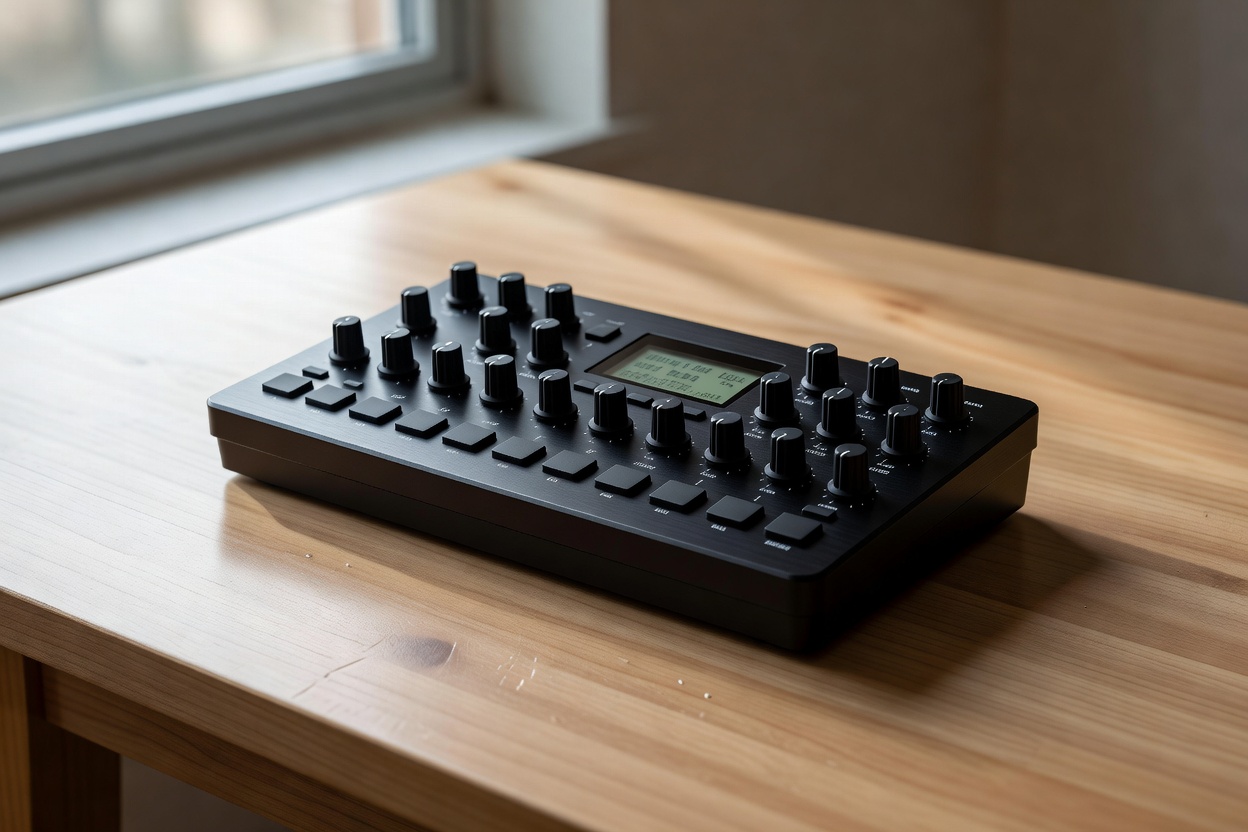
The Model:Samples takes a different risk. It is not a sampler. It cannot record. Samples load over USB, and that constraint frustrates people who want to grab a vocal chop or a field recording on the fly. But the constraint also forces discipline. You curate a palette, you load it, you play. The six velocity-sensitive pads respond with the kind of immediacy that makes you forget you're triggering static files. Both units share the same physical DNA: six tracks, six pads, a generous knob-per-function layout that rewards muscle memory. They look identical. They feel identical. The difference lives entirely in the sound source.
Six tracks looks restrictive on paper. Kick, snare, hi-hat — three tracks gone. Bass, melody, percussion — three left. That math scares off producers who count tracks like they count plugins. The math is wrong. Elektron's sequencer runs on trigs and locks. A trig is an event, usually a note trigger. A lock is a step-specific parameter snapshot. Sound locks let you change the sample or preset on a single step. Your kick and snare can share track one if they never land on the same step. Your bass can morph from a sub sine to a metallic FM growl on step twelve. Your melody track can cycle through four different timbres across a sixteen-step pattern. Six tracks becomes eighteen, twenty, thirty effective voices — provided you sequence with intention.
The sequencer is the real product. Elektron's expensive boxes — the Syntakt, the Digitone, the Tonverk — bury this same sequencer under layers of modulation routing, patch cables, and menu diving that require a manual and a weekend to internalize. The Models surface it. You get trigs and locks without the modular scaffolding. You get probability, ratcheting, Euclidean rhythms, and per-step parameter locks without needing a degree in the company's proprietary paradigm. This is not a dumbed-down sequencer. It is the same engine with the friction removed.
Critics will note the USB dependency, the lack of audio input, the plastic chassis that feels lighter than a Volca. They will note the screen — a small OLED that conveys parameter values but not waveforms. They will note that the Model:Samples cannot timestretch or pitch-shift samples without artifacts. These are real limitations. They are also the point. A $400 instrument that does not have limitations is a $400 instrument that does not exist. The question is whether the limitations break your workflow or focus it. For me, they focus it. I own a Digitakt. I own a Syntakt. I still reach for the Model:Cycles when I need a bassline that sounds like it fell out of a 1999 Gatecrasher set. I reach for the Model:Samples when I want a drum kit that breathes like a human played it — because the velocity response on those pads captures ghost notes and flam dynamics that my $2,000 controller keyboard misses.
The market treats budget gear as disposable. Buy it, outgrow it, flip it. The Models resist that cycle. They do not sound like starter gear. They sound like Elektron. The sequencer does not sequence like starter gear. It sequences like Elektron. The only starter trait is the price. That price will rise. The used market has already noticed. Model:Cycles units that sat on Reverb for months at $350 now list at $450 and sell in days. The sleep is ending. Buy before the woke tax hits.